Chapter One: The Boy Outside the Diner
Thanksgiving morning in 1986 was bitterly cold.
A thin layer of ice covered the sidewalks of our small town in Pennsylvania, and the wind carried the unmistakable promise of snow.
I was thirty-one years old, recently divorced, and raising my seven-year-old daughter, Rachel, on a secretary’s salary.
Money was scarce that year.
After paying the rent, purchasing groceries, and setting aside enough for the heating bill, I had exactly thirty-eight dollars left in my purse.
I remember the amount because I had counted it three times before leaving home.
Rachel was spending Thanksgiving with her father, and rather than preparing an elaborate meal for myself, I decided to visit a little restaurant called Sullivan’s Diner.
It was one of the few places open that afternoon.
As I approached the entrance, I noticed a teenage boy sitting beside the building.
He couldn’t have been more than sixteen.
His brown jacket was too thin for the weather, his shoes were worn, and his dark hair fell untidily across his forehead.
He was watching people through the restaurant window.
Whenever someone walked past, he lowered his eyes.
Something about him made me stop.
“Are you waiting for somebody?” I asked.
He shook his head.
“No, ma’am.”
“Have you eaten?”
He hesitated.
“I’m fine.”
It was the kind of answer people gave when they were embarrassed to admit they weren’t.
I looked through the window at the Thanksgiving meals being served inside.
Then I looked back at the boy.
“Would you like some dinner?”
He glanced at me suspiciously.
“I don’t have any money.”
“I didn’t ask whether you had money.”
He studied my face.
“Why would you buy me dinner?”
I smiled.
“Because it’s Thanksgiving, and nobody should spend Thanksgiving hungry.”
He remained seated.
I wondered whether he had learned not to trust strangers.
Finally, I opened the restaurant door.
“Come on. It’s warmer inside.”
He stood slowly and followed me.
We sat in a booth near the window.
The waitress brought two menus, and the boy immediately looked at the cheapest items.
“You can order the Thanksgiving special,” I told him.
“That’s expensive.”
“Today, it’s affordable.”
He looked uncertain but eventually nodded.
When the waitress delivered his dinner, he stared at the plate for several seconds before picking up his fork.
Roasted turkey, mashed potatoes, stuffing, green beans, and cranberry sauce.
He ate quickly at first.
Then, realizing nobody was going to take the food away, he slowed down.
“What’s your name?” I asked.
“Matthew.”
“I’m Susan.”
He nodded politely.
I noticed him looking at the small silver butterfly necklace around my neck.
“My mom had one like that,” he said.
“Really?”
He nodded.
“She liked butterflies.”
“That’s lovely.”
He looked down at his plate.
“She died.”
I didn’t know what to say.
Eventually, I reached across the table and placed my hand beside his.
“I’m very sorry, Matthew.”
He swallowed.
“Thank you.”
That afternoon, a meal costing less than fifteen dollars became the beginning of a conversation I would remember for the rest of my life.
Chapter Two: A Childhood Interrupted
Matthew told me his mother had died from cancer eighteen months earlier.
His father had disappeared when he was a small child.
After his mother’s death, he had lived with an uncle who frequently drank and struggled to maintain employment.
Their relationship had deteriorated until Matthew no longer felt safe staying there.
Three weeks earlier, he had left.
Since then, he had spent nights wherever he could find temporary shelter.
Sometimes, acquaintances allowed him to sleep on their couches.
Other nights, he remained outside.
“Do you go to school?” I asked.
“Not anymore.”
“Did you enjoy it?”
He shrugged.
“Science, mostly.”
“What did you want to become?”
For the first time, his expression brightened.
“A doctor.”
Then he laughed as though embarrassed by his own answer.
“I guess that’s not happening now.”
“Why not?”
He looked at his worn sleeves.
“Look at me.”
“I am looking at you.”
He lowered his head.
“I don’t even have a place to live.”
“That doesn’t mean you don’t have a future.”
Matthew remained silent.
I suspected those words sounded impossible to someone whose immediate concern was finding somewhere warm enough to survive the night.
I purchased another cup of hot chocolate and asked whether he would allow me to help him contact someone who worked with young people in difficult circumstances.
He immediately became nervous.
“I don’t want to go back to my uncle.”
“I understand.”
“Promise?”
“I can’t promise what someone else will decide, but I can help make sure they hear your concerns.”
He considered the offer carefully.
Eventually, he agreed.
I telephoned a local youth assistance organization from the payphone near the restaurant entrance.
A worker explained the available emergency arrangements and agreed to speak with Matthew.
While we waited, I purchased a sandwich for him to take along.
Then I reached into my purse.
I had approximately eighteen dollars remaining.
I placed ten dollars beside his plate.
“For anything you might need.”
Matthew stared at the money.
“I can’t take that.”
“Of course you can.”
“But you already bought me dinner.”
“Then consider this a small investment.”
“In what?”
“Your future.”
He almost smiled.
Before leaving, he pointed toward my necklace.
“Why do you wear that?”
I touched the silver butterfly.
“My mother gave it to me when I graduated from high school. She said butterflies reminded her that difficult beginnings didn’t have to determine how a life ended.”
Matthew looked thoughtful.
“I like that.”
“So do I.”
I found a napkin and borrowed a pen from the waitress.
On it, I wrote:
Your circumstances are not your destiny. Keep believing in tomorrow.
I signed my first name.
Then I gave it to him.
Matthew folded the napkin carefully and placed it inside his jacket.
When the youth worker arrived, I introduced them and explained what Matthew had shared with me, allowing him to speak for himself.
He thanked me several times before leaving.
At the doorway, he turned back.
“Maybe I’ll become a doctor someday.”
I smiled.
“Then make sure you’re a kind one.”
He nodded.
“I will.”
Those were the last words I heard from him for forty years.
Chapter Three: The Years That Followed
Life did not suddenly become easier after that Thanksgiving.
My rent increased.
Rachel needed new clothes, school supplies, and eventually braces.
My old car required repairs I could barely afford.
There were months when I wondered how we would manage.
Nevertheless, we survived.
I eventually found a better-paying position at a local insurance office, where I remained for nearly thirty years.
Rachel grew into a thoughtful, independent young woman.
She graduated from college, became a teacher, married a wonderful man named Daniel, and gave me two grandchildren.
I never remarried.
There were opportunities, but somehow, I became comfortable with the life I had built.
I enjoyed gardening, reading novels, attending church, and spending Sunday afternoons with my family.
Through all those years, I continued wearing my silver butterfly necklace.
Its chain occasionally needed replacing, but the little pendant remained unchanged.
Sometimes, on Thanksgiving, I remembered Matthew.
I wondered whether the youth organization had helped him.
Had he returned to school?
Had he found a stable home?
Had he ever pursued his dream of becoming a doctor?
I had no surname, no address, and no reliable way of finding him.
The organization could not disclose private information about the young people it assisted.
I respected that.
Still, I hoped he was somewhere safe.
One Thanksgiving, Rachel asked why I always insisted on donating meals to the local community center.
I told her about the boy outside Sullivan’s Diner.
“Did you ever see him again?” she asked.
“No.”
“Do you think he remembers you?”
I laughed softly.
“Probably not. It was only one meal.”
Rachel shook her head.
“Maybe it wasn’t only a meal to him.”
I considered her words.
Then I returned to preparing dinner.
Years continued passing.
My dark hair turned gray.
My grandchildren grew taller than me.
The insurance office eventually celebrated my retirement with a cake, flowers, and a collection of photographs from the decades I had spent there.
By 2026, I was seventy-one years old.
My knees complained during cold weather, and I needed glasses to read the smallest print.
But I was generally content.
Then, one October morning, everything changed.
I was standing in my kitchen preparing breakfast when I suddenly experienced a severe headache.
The room seemed to tilt.
My left hand felt unusually weak, and I struggled to remain steady.
Fortunately, Rachel happened to be visiting.
“Mom?”
She noticed my expression immediately.
Within minutes, she had called emergency services.
As the paramedics transported me to the hospital, I remember staring at the ceiling of the ambulance and wondering whether I would ever see my little house again.
I reached for the butterfly necklace.
For reasons I couldn’t explain, holding it made me feel less frightened.
I had no idea that the necklace would soon connect my present to a moment I had nearly forgotten.
Chapter Four: The Diagnosis
The emergency department was crowded that morning.
Doctors and nurses moved quickly between examination rooms while monitors sounded in the background.
Rachel remained beside me whenever staff permitted.
Following an examination and urgent imaging, the medical team discovered a concerning brain aneurysm that required specialist evaluation and treatment.
I listened carefully as the physician explained the findings.
Although I understood most of his words, the implications frightened me.
“Am I going to need surgery?”
“We’re arranging for the neurosurgical team to assess you,” he replied.
Rachel took my hand.
“We’ll get through this, Mom.”
I tried to smile.
But I could see the fear in her eyes.
Later that afternoon, a specialist explained that my condition required treatment and careful monitoring.
The team discussed the available options, their risks, and the importance of acting appropriately.
I had spent most of my life avoiding hospitals whenever possible.
Now, I found myself lying beneath white blankets, listening to conversations about procedures I had never imagined needing.
That evening, Rachel searched for information about the hospital’s neurosurgical department.
“Mom, they have an excellent team here.”
“That’s reassuring.”
“One of their senior surgeons is particularly well known. Dr. Matthew Bennett.”
I looked at her.
“Matthew?”
“Yes. He’s been involved in some important research and specializes in complex neurological conditions.”
The name briefly stirred a memory.
Then I dismissed it.
There were thousands of men named Matthew.
My daughter continued reading.
“He also established a foundation that helps disadvantaged students pursue medical careers.”
“Sounds like a good man.”
“I think you’re in capable hands.”
I nodded.
Shortly afterward, a nurse entered to check my observations.
She noticed me holding my necklace.
“That’s beautiful,” she said.
“Thank you. I’ve had it since I was eighteen.”
“Something special?”
“My mother gave it to me.”
She smiled.
“Those are the best kinds of things.”
After she left, I turned toward the window.
Outside, the evening sky had grown dark.
I thought about Rachel, my grandchildren, and the many ordinary pleasures I had taken for granted.
Morning coffee.
Fresh flowers in the garden.
Thanksgiving dinner.
The sound of my grandchildren laughing.
I wasn’t ready to say goodbye to any of them.
The following morning, the door opened shortly after eight.
A tall man wearing a white coat entered with another physician.
His hair was silver at the temples, and his expression was calm.
“Good morning, Mrs. Carter. I’m Dr. Matthew Bennett.”
He introduced himself and began explaining my condition.
His manner was reassuring, his explanations clear.
Then, halfway through our conversation, he stopped.
His eyes settled on the necklace resting against my hospital gown.
For several seconds, he stared at it.
“Mrs. Carter,” he said slowly, “may I ask where you got that necklace?”
I touched the pendant.
“My mother gave it to me.”
He moved slightly closer.
“A silver butterfly.”
“Yes.”
His expression changed.
“Have you lived in Pennsylvania your entire life?”
“Most of it.”
“Were you ever called Susan Miller?”
My heart began pounding.
Miller was my surname before I later restored my maiden name, Carter.
“How do you know that?”
The doctor looked at me in disbelief.
Then he asked a question I hadn’t heard in forty years.
“Do you remember Sullivan’s Diner?”
Chapter Five: The Boy Who Became a Doctor
For several seconds, I could not speak.
Rachel looked between us.
“Mom?”
I stared at the distinguished surgeon standing beside my hospital bed.
Then I remembered a teenage boy with worn shoes, a thin brown jacket, and a dream he barely dared to express.
“Matthew?”
His eyes filled with tears.
“Yes, ma’am.”
I covered my mouth.
“Oh, my goodness.”
He smiled.
“It’s been a long time.”
“Forty years.”
“Almost exactly.”
Rachel slowly rose from her chair.
“Are you the boy from Thanksgiving?”
Matthew turned toward her.
“Your mother bought me dinner when I was sixteen.”
Rachel stared at him.
“She told me that story years ago.”
He looked back at me.
“You remembered?”
“Of course I remembered.”
I began crying.
The realization seemed almost impossible.
The frightened teenager I had once invited into a diner had become a respected surgeon.
“You did it,” I whispered.
Matthew nodded.
“I did.”
For a moment, he looked remarkably like the boy I remembered.
Then he took a breath and returned to the reason he had entered my room.
He explained that my medical care remained the immediate priority and that the team would continue making decisions according to my clinical needs.
Given our unexpected personal connection, he would discuss the circumstances with his colleagues and ensure appropriate professional safeguards.
I appreciated his honesty.
But before leaving, he asked whether he could return later when circumstances permitted.
“There’s something I’d like to tell you.”
“Of course.”
He smiled warmly.
“And there’s something I’d like to show you.”
After he left, Rachel sat beside me.
Neither of us spoke for several seconds.
Then she began laughing through her tears.
“Mom, you bought Thanksgiving dinner for a future brain surgeon.”
I shook my head.
“No, sweetheart.”
I looked toward the doorway.
“I bought Thanksgiving dinner for a hungry boy.”
That distinction mattered.
I hadn’t known what Matthew would become.
I hadn’t helped him because he possessed unusual talent or promised to accomplish something remarkable.
I had helped him because he needed dinner.
And because, for a moment, I could do something about it.
Chapter Six: The Napkin He Never Threw Away
Matthew returned later that afternoon.
He was no longer accompanied by another physician, and he carried a small brown leather wallet.
“Do you have a few minutes?”
“I have considerably more free time than usual.”
He laughed.
Then he sat beside my bed.
“I’ve been trying to find you for years.”
“Me?”
“Yes.”
He opened his wallet and removed a transparent protective sleeve.
Inside was a yellowed piece of paper.
Its edges were worn, and the writing had faded considerably.
But I recognized it immediately.
It was the napkin from Sullivan’s Diner.
Matthew handed it to me carefully.
I read the words I had written four decades earlier.
Your circumstances are not your destiny. Keep believing in tomorrow.
Beneath them was my signature.
Susan.
I touched the protective sleeve.
“You kept this?”
“Every day.”
I looked up at him.
“How?”
He smiled.
“Eventually, I had it preserved.”
Then he told me what happened after we parted.
The youth organization helped arrange temporary accommodation and connected him with appropriate services.
A social worker named Mrs. Henderson became an important figure in his life.
She helped him return to school and advocated for his educational needs.
A retired couple later provided him with a stable foster home.
“They were wonderful people,” he said. “They gave me rules, responsibilities, and a bedroom that was actually mine.”
He worked hard to catch up academically.
Several teachers recognized his abilities and encouraged him to pursue further education.
He eventually earned scholarships, attended college, and entered medical school.
There were many difficult years.
He worked part-time jobs, studied late into the night, and occasionally questioned whether he could continue.
“Whenever things became overwhelming,” he said, “I read your words.”
I looked at the napkin again.
“Matthew, there were so many people who helped you.”
“There were.”
“They deserve credit.”
“They do.”
He paused.
“But you were the first person in a long time who looked at me and saw something other than a problem.”
My eyes filled with tears.
He continued.
“You didn’t know whether I was intelligent. You didn’t know whether I would succeed. You simply believed I deserved another chance.”
“I believed you deserved dinner.”
He laughed softly.
“Yes. And somehow, that was exactly what I needed.”
Matthew told me that becoming a physician had required years of education, support, determination, and opportunity.
He never pretended that one Thanksgiving meal had accomplished everything.
But that afternoon had marked a turning point in how he understood himself.
“For the first time since my mother died, somebody asked what I wanted to become.”
He looked at me.
“And when I told you I wanted to be a doctor, you didn’t laugh.”
I reached for his hand.
“I’m glad I didn’t.”
“So am I.”
Chapter Seven: The Longest Night
My treatment was scheduled after the medical team completed its assessment.
Despite Matthew’s reassuring presence and the professionalism of everyone caring for me, I remained frightened.
The evening before the procedure, Rachel sat beside my bed.
She had brought a book, although neither of us felt much like reading.
“Are you scared, Mom?”
“Yes.”
She squeezed my hand.
“Me too.”
I smiled.
“I’m glad we can still tell each other the truth.”
Later, Matthew briefly visited.
He explained that the clinicians responsible for my treatment would keep us informed and that he would remain available in accordance with the hospital’s arrangements.
Then he pointed toward my necklace.
“You’ll need to keep that somewhere safe during the procedure.”
I removed it carefully and gave it to Rachel.
“Don’t lose it.”
She smiled.
“Never.”
Matthew looked at the pendant.
“Your mother was right about butterflies.”
I laughed.
“She usually was.”
He pulled a chair closer.
“Do you remember telling me to become a kind doctor?”
“Yes.”
“I’ve tried.”
There was something deeply moving about hearing those words from a man whose career had touched countless lives.
He continued.
“Medicine can be difficult. Sometimes we can’t give people the answers they want. Sometimes all we can do is explain honestly, listen carefully, and make sure nobody feels abandoned.”
He smiled gently.
“I learned something about that before I ever entered medical school.”
After he left, I slept more peacefully than I expected.
The following morning, the medical team prepared me for treatment.
Rachel hugged me before I was taken away.
“I’ll be right here when you’re finished.”
“I know.”
As the hospital corridor moved past me, I thought about that cold afternoon in 1986.
The teenage boy outside the diner.
The plate of turkey.
The folded napkin.
The small silver butterfly.
Life was full of moments whose importance remained hidden until much later.
Sometimes, we never discovered what became of them.
I had been fortunate enough to discover one.
When I regained awareness after the procedure, the first face I recognized was Rachel’s.
She was crying and smiling at the same time.
“Mom?”
I blinked.
“Hello, sweetheart.”
She leaned forward and kissed my forehead.
“The doctors said the procedure went well.”
I closed my eyes.
“Thank goodness.”
The recovery would require monitoring, follow-up care, and patience.
But I had been given another opportunity to continue living the ordinary life I loved.
And this time, I intended to appreciate it even more.
Chapter Eight: The Family He Had Built
Several days later, Matthew visited again.
He brought flowers and a photograph of his family.
His wife, Caroline, was a pediatric nurse.
They had three grown children.
Their eldest daughter was a social worker.
Their son was an engineer.
Their youngest daughter was studying medicine.
“You must be very proud,” I said.
“Extremely.”
He pointed toward a photograph of his youngest daughter.
“Her name is Susan.”
I looked at him.
“Really?”
He nodded.
“My wife and I chose it because there were several remarkable women who influenced my life. You were one of them.”
I began crying again.
“You’re going to make me run out of tissues.”
He laughed.
Then he showed me photographs from the educational foundation he had established.
The organization provided scholarships, mentoring, and practical assistance to young people experiencing financial hardship or unstable housing who hoped to pursue careers in healthcare.
Matthew explained that several former scholarship recipients had already become nurses, physicians, and other healthcare professionals.
Others were still completing their education.
“I wanted to create opportunities for students who might otherwise believe their circumstances had already determined their future.”
I recognized the sentiment.
He smiled.
“Your words.”
I examined the photographs.
Young people stood in graduation gowns, laboratory coats, and hospital uniforms.
Some held certificates.
Others stood beside the families, teachers, and mentors who had supported them.
I felt overwhelmed.
“Look at what you’ve accomplished.”
Matthew shook his head.
“Look at what people can accomplish when somebody gives them a chance.”
He told me about the countless individuals who had helped develop the foundation.
Donors.
Teachers.
Medical professionals.
Community volunteers.
Former foster parents.
He insisted that their contributions deserved recognition.
But then he pointed toward my necklace, which Rachel had returned to me.
“I chose a butterfly for our foundation’s emblem.”
He opened a brochure.
There, above the organization’s name, was a simple silver butterfly.
I stared at it.
“Because of this?”
“Because of what it meant.”
He paused.
“A difficult beginning doesn’t have to determine how a life ends.”
I remembered my mother’s words.
She had spoken them to me more than fifty years earlier.
She could never have imagined how far they would travel.
From a mother to her daughter.
From a stranger to a frightened teenage boy.
From that boy to hundreds of young people building futures of their own.
Chapter Nine: The Thanksgiving Invitation
By the middle of November, I had returned home.
Rachel helped coordinate my recovery, ensuring that I attended my appointments and followed the medical team’s recommendations.
I was grateful to be surrounded by familiar things.
My favorite armchair.
The little garden outside the kitchen window.
The photographs along the hallway.
Even the old clock that ticked too loudly in the living room seemed comforting.
One afternoon, a cream-colored envelope arrived.
Inside was an invitation to a Thanksgiving dinner hosted by Matthew’s foundation.
A handwritten message appeared beneath the printed details.
Dear Susan,
Forty years ago, you invited me to Thanksgiving dinner.
This year, I would be honored if you allowed me to return the invitation.
With gratitude,
Matthew.
I smiled.
Rachel immediately insisted that we attend, provided my recovery and medical guidance allowed it.
When Thanksgiving arrived, she helped me choose a dark blue dress and a cream cardigan.
I fastened the butterfly necklace around my neck.
Then we drove to a community center that had been beautifully decorated for the occasion.
Inside, long tables were arranged beneath warm lights.
Autumn flowers stood beside baskets of bread.
Volunteers carried trays of turkey, potatoes, vegetables, and pies.
There were families, elderly guests, students, and people who might otherwise have spent the holiday alone.
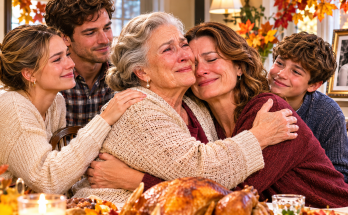
Matthew greeted us near the entrance.
He wore a simple sweater rather than his white coat.
“Happy Thanksgiving, Susan.”
“Happy Thanksgiving, Doctor.”
He laughed.
“Matthew is perfectly fine.”
His wife welcomed me warmly, and his daughter Susan introduced herself with an affectionate hug.
“I’ve heard about you since I was a little girl.”
“You have?”
“Dad tells the diner story almost every Thanksgiving.”
I looked toward Matthew.
He smiled.
“It’s an important story in our family.”
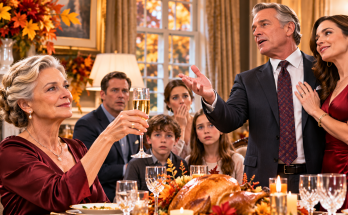
We sat together while dinner was served.
Matthew asked about Rachel’s teaching career.
Rachel spoke with his daughter about healthcare education.
For a while, our families talked as though we had known one another for years.
Then Matthew walked toward the front of the room.
He picked up a microphone.
“Forty years ago today, I was a sixteen-year-old boy who believed his future had already ended.”
The room became quiet.
He told the guests about Sullivan’s Diner.
About the woman who had stopped.
About the dinner.
About the napkin.
Then he turned toward me.
“And tonight, after searching for her for years, I finally have the opportunity to introduce her.”
My hands began trembling.
Rachel helped me stand.
The room filled with applause.
I looked at Matthew and shook my head.
I had never expected recognition for something so ordinary.
But he wasn’t finished.
Chapter Ten: A Scholarship With My Name
Matthew invited several young people to join him at the front of the room.
They were students participating in the foundation’s educational programs.
One young woman was preparing to attend nursing school.
Another hoped to become a pediatrician.
A young man described his ambition to work in emergency medicine.
As they spoke, I recognized something familiar in their expressions.
Hope mixed with uncertainty.
The same expression Matthew had worn when he told me he wanted to become a doctor.
Then Matthew addressed the audience again.
“Tonight, we’re announcing a new scholarship within our foundation.”
A volunteer uncovered a small display bearing a silver butterfly.
Beneath it were the words:
The Susan Carter Butterfly Scholarship
I stared at the sign.
Matthew explained that the scholarship had been established with contributions from several donors, including himself.
It would provide educational assistance and mentoring opportunities to eligible students facing circumstances that could otherwise prevent them from pursuing healthcare careers.
He turned toward me.
“Susan, I hope you don’t mind us using your name.”
I laughed through my tears.
“I suppose it’s a little late to object.”
The audience laughed.
Then Matthew handed me a framed copy of the message I had written on the napkin.
Beneath my original words was an additional sentence.
One ordinary act of kindness can become an extraordinary beginning.
I held the frame against my chest.
Matthew looked toward the students.
“I cannot promise that everyone receiving this scholarship will become a surgeon.”
He smiled.
“That isn’t the purpose.”
The room remained quiet.
“The purpose is to ensure that difficult circumstances do not become an excuse for the rest of us to stop believing in someone.”
I looked at the young faces surrounding him.
There were so many possible futures in that room.
So many lives waiting to unfold.
And suddenly, I felt grateful not merely for the dinner I had purchased forty years earlier, but for every person who had continued the work that began that afternoon.
After the announcement, one of the students approached me.
Her name was Hannah.
“Mrs. Carter?”
“Yes, sweetheart?”
“I wanted to thank you.”
“For what?”
She smiled nervously.
“I’m one of the first students receiving the new scholarship.”
I took her hand.
“What would you like to become?”
“A doctor.”
I smiled.
“Then make sure you’re a kind one.”
Across the room, Matthew heard me.
His eyes filled with tears.
Neither of us needed to explain why.
Chapter Eleven: The Price of a Thanksgiving Dinner
After most of the guests had departed, Matthew and I sat together near a window overlooking the parking lot.
Snow had begun falling.
It reminded me of the weather outside Sullivan’s Diner forty years earlier.
Matthew placed two cups of coffee on the table.
“Do you remember how much my dinner cost?”
I laughed.
“Not exactly. Less than fifteen dollars, I think.”
He smiled.
“I’ve wondered about that for years.”
“Why?”
“Because I’ve spent my entire adult life trying to understand how something so inexpensive could have meant so much.”
I considered his question.
“Perhaps it wasn’t the dinner.”
He nodded.
“That’s what I eventually realized.”
He looked toward the empty tables.
“I was hungry that afternoon. But I was also frightened, lonely, and ashamed.”
He paused.
“People walked past me. Most didn’t notice me. Some looked uncomfortable.”
I listened quietly.
“You were the first person who asked what I wanted to become instead of asking what was wrong with me.”
I felt tears gathering.
“Matthew, I wish I could have done more.”
He shook his head.
“You did what you could.”
“I didn’t know whether you’d be all right.”
“I know.”
He looked directly at me.
“And that’s what made it special. You helped me even though you might never know what happened afterward.”
I remembered leaving the diner with only a few dollars in my purse.
At the time, I had briefly worried that I had spent more than I should have.
But I had never regretted it.
Matthew reached into his pocket and removed something.
It was a ten-dollar bill.
He placed it on the table.
“Do you remember giving me ten dollars that afternoon?”
“Yes.”
“I thought perhaps I should finally return your investment.”
I laughed.
“After forty years? I’m afraid the interest must be considerable.”
He smiled.
“Very considerable.”
I pushed the bill back toward him.
“Give it to someone who needs it.”
He nodded.
“I thought you might say that.”
Then we sat quietly, watching the snow.
There was no grand announcement.
No audience.
No applause.
Just two people who had once shared dinner in a little restaurant and somehow found each other again after four decades.
Chapter Twelve: Another Beginning
The following morning, I woke in my own bedroom.
Sunlight filtered through the curtains.
Downstairs, Rachel was preparing coffee.
My grandchildren were arguing cheerfully about who should have the last piece of pumpkin pie.
The house felt wonderfully ordinary.
I walked into the kitchen wearing my slippers and favorite cardigan.
Rachel looked at me.
“How are you feeling?”
“Grateful.”
She smiled.
“For everything?”
“For more than I can count.”
After breakfast, I placed Matthew’s framed gift beside my mother’s photograph.
The silver butterfly rested against my chest.
I thought about my mother, who had given me the necklace when I was eighteen.
She had never become wealthy or famous.
She had worked hard, raised her children, and helped neighbors whenever she could.
I wondered whether she ever realized that something she said to her daughter would eventually inspire a scholarship helping future medical professionals.
Probably not.
That was the extraordinary thing about kindness.
Its consequences were rarely visible from where they began.
A mother gave her daughter a necklace.
A woman purchased dinner for a teenage boy.
A social worker helped him find stability.
Teachers encouraged his ambitions.
A foster family gave him somewhere to belong.
And years later, a physician created opportunities for young people who needed someone to believe in them.
No single person could claim responsibility for everything that followed.
Yet every person had contributed something meaningful.
Several weeks later, Matthew invited me to visit the foundation’s office.
In the reception area, a silver butterfly had been placed on the wall.
Beneath it were photographs of scholarship recipients.
I stood there for a long time.
Matthew approached me.
“What do you think?”
“I think your mother would be very proud of you.”
His expression softened.
“I hope so.”
“I know so.”
He looked at my necklace.
Then he smiled.
“Would you have believed any of this if someone had told you about it forty years ago?”
I laughed.
“Absolutely not.”
“Neither would I.”
As we walked through the office, several young people greeted him warmly.
He remembered their names, asked about their studies, and listened carefully to their answers.
Watching him, I realized that the frightened boy outside Sullivan’s Diner had fulfilled more than one promise.
He had become a doctor.
But more importantly, he had become a kind one.
That evening, I returned home and opened my old family album.
I found a photograph of myself taken in 1986.
I was thirty-one, wearing a simple blouse and the same little silver butterfly.
My face looked younger than I remembered.
Behind that smile had been worries about money, loneliness, and the uncertainty of raising a child alone.
I wished I could tell that younger woman what would happen one Thanksgiving afternoon.
I wished I could tell her that the small kindness she could barely afford would become part of something much greater.
But perhaps it was better that she never knew.
Because she had stopped to help without expecting anything in return.
And that was what made the gesture worth remembering.
I closed the album and looked toward the framed scholarship announcement.
Forty years earlier, I believed I was purchasing dinner for a homeless teenager.
I never imagined that one day I would find him standing beside my hospital bed, wearing a white coat and carrying the words I had written on a restaurant napkin.
I never imagined he would build a foundation.
Or help future generations pursue their dreams.
Or remind an aging woman that her life had mattered in ways she could never have measured.
I had given Matthew a warm meal when his world felt impossibly cold.
He had taken that warmth and shared it with others.
And somewhere, perhaps on another freezing Thanksgiving afternoon, another frightened young person would discover that the world had not forgotten them.
That their circumstances were not their destiny.
That tomorrow was still worth believing in.
I touched my silver butterfly necklace and smiled.
Some gifts are forgotten within days.
Others last a lifetime.
And the most beautiful ones continue traveling long after they leave our hands.
THE END