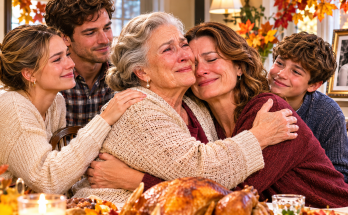
Chapter One: Fifty-Two Years of Hard Work
“Dad, it’s only a signature. You know the farm will belong to me eventually.”
My son, Jonathan, pushed a folder across the kitchen table.
Outside, the November wind carried golden leaves across the fields. Beyond the barn, the setting sun illuminated the rolling acres that had been my home for more than half a century.
I looked at the folder but didn’t open it.
“Why does it need to happen now?”
Jonathan sighed.
“Because you’re seventy-six years old. We need to start thinking practically.”
My name is William Harrison. For fifty-two years, I had worked the same family farm outside Lexington, Kentucky.
My wife, Eleanor, and I purchased the original property shortly after our wedding in 1974. Back then, it consisted of sixty acres, a deteriorating farmhouse, and a barn that seemed determined to collapse during every thunderstorm.
We had very little money.
What we possessed was determination, two capable pairs of hands, and a shared belief that difficult work could eventually create something worth keeping.
Over the decades, we expanded the property to nearly three hundred acres.
We raised cattle, grew crops, survived droughts, endured difficult financial seasons, and built a comfortable life for our family.
Eleanor kept the accounts while I managed daily operations.
Our children, Jonathan and Claire, grew up learning how to repair fences, feed livestock, and appreciate the satisfaction of an honest day’s work.
When Eleanor died six years earlier, the farm became more precious to me than ever.
Every corner carried her memory.
The maple tree beside the porch.
The vegetable garden behind the kitchen.
The little wooden bench overlooking the southern pasture.
I still sat there on Sunday evenings, imagining her beside me.
Jonathan knew what the land meant to me.
At least, I thought he did.
“Let me read the documents,” I said.
He glanced at his wife, Melissa.
She smiled reassuringly.
“William, we’re simply trying to make your retirement easier. You shouldn’t have to worry about managing such a large property anymore.”
“I have people helping me.”
“We know,” she replied. “But wouldn’t it be wonderful to enjoy your remaining years without all these responsibilities?”
My remaining years.
Something about that expression bothered me.
Jonathan opened the folder and pointed toward several signature lines.
“We’ve already had everything prepared.”
“By whom?”
“A legal professional.”
“Why didn’t you speak with Henry?”
Henry Lawson had been my attorney for more than twenty-five years.
Jonathan looked uncomfortable.
“We didn’t want to involve too many people.”
I closed the folder.
“I’ll have Henry review everything after Thanksgiving.”
Melissa’s smile disappeared.
“But we were hoping to finish this before Thursday.”
“Why Thursday?”
Neither answered immediately.
Then Jonathan shook his head.
“Dad, sometimes I wish you’d trust me a little more.”
I looked at my son.
“I’ve trusted you your entire life.”
At the time, I didn’t realize how much that trust was about to cost me.
Chapter Two: My Granddaughter’s Innocent Question
Jonathan and Melissa stayed for dinner that evening.
Their ten-year-old daughter, Lily, helped me feed the chickens before we returned to the farmhouse.
Lily loved the farm.
She spent summer afternoons collecting eggs, following butterflies through the garden, and asking questions about everything she encountered.
Eleanor would have adored her curiosity.
As I closed the chicken coop, Lily took my hand.
“Grandpa, where will the horses go?”
I looked down at her.
“What horses?”
“Our horses. And the cows.”
“Why would they go anywhere?”
She frowned.
“Because of the hotel.”
I stopped walking.
“What hotel?”
“The big one Daddy and Mommy were talking about.”
For several seconds, I thought she was describing something unrelated.
“Where are they building a hotel?”
“Here.”
She pointed toward the southern pasture.
“Mommy said there would be a swimming pool and lots of little houses where people could stay.”
A strange feeling settled in my stomach.
“Who told you that?”
“I heard Mommy talking to Grandma Patricia on the phone.”
Melissa’s mother had always been interested in real estate investments.
Lily continued innocently.
“She said Daddy just needed you to sign the papers first.”
The wind moved through the trees.
Somewhere beyond the barn, cattle were gathering near the fence.
I looked across the fields I had spent fifty-two years cultivating.
“Did your parents say anything else?”
Lily thought for a moment.
“Mommy said we’d have enough money to buy a house near the beach.”
“Did she say where I would live?”
Lily’s expression changed.
“She said you would get a nice apartment with people who could look after you.”
I struggled to speak.
Then Lily asked the question that broke my heart.
“Grandpa, will I still be allowed to visit you?”
I knelt beside her.
“Of course, sweetheart.”
“Even when the farm is gone?”
I pulled her into my arms.
“The farm isn’t going anywhere.”
She smiled with relief.
I didn’t ask her any more questions.
She was a child, not someone I wanted caught between her parents and grandfather.
But as we walked back toward the farmhouse, my thoughts returned to the folder Jonathan had placed before me.
My son had claimed he wanted to make my retirement easier.
His daughter had just revealed that he might be planning something entirely different.
Chapter Three: The Documents
After Jonathan and his family left, I poured myself a cup of coffee and carried the folder into my study.
Eleanor’s old accounting desk stood beneath the window.
Her photograph rested beside a collection of farming journals.
I switched on the lamp and opened the documents.
The first appeared to concern the transfer of ownership interests in the farm.
The second gave Jonathan extensive authority over certain property decisions.
The third contained references to future development opportunities.
I wasn’t a lawyer, but I understood enough to recognize that these were considerably more than retirement arrangements.
Several pages described powers that could affect the sale, management, and financing of the property.
I read everything twice.
Then I noticed a separate sheet tucked into the back of the folder.
It contained a map.
My farm had been divided into several numbered sections.
The southern pasture was marked for residential development.
The northern fields were designated for commercial facilities.
A proposed access road ran directly through Eleanor’s garden.
Near the center of the map stood a rectangular area labeled:
Proposed Hospitality Development.
I stared at those words.
Lily had been telling the truth.
Someone had prepared preliminary plans for a resort development on my land.
The farmhouse appeared to be outside the proposed construction areas, but another notation indicated that its future use would require further consideration.
I imagined strangers walking across the fields.
Bulldozers clearing the trees.
The barn disappearing.
Eleanor’s garden buried beneath concrete.
My hands began trembling.
I reached for the telephone and called Henry.
He answered after several rings.
“William? Everything all right?”
“I hope I’m not disturbing you.”
“Not at all.”
“I have some documents I need you to examine.”
“What kind?”
“My son wants me to transfer ownership of the farm.”
Henry became quiet.
“Have you signed anything?”
“No.”
“Good. Keep it that way.”
I explained what Lily had overheard and described the development map.
Henry listened carefully.
When I finished, he said something that made me feel even more uneasy.
“William, development plans of that detail are rarely prepared without preliminary discussions.”
“What does that mean?”
“It means someone may have been negotiating over your property for longer than you realize.”
We arranged to meet the following morning.
After ending the call, I sat beside Eleanor’s photograph.
For decades, we had worried about weather, livestock prices, equipment failures, and whether our children would have enough opportunities in life.
Never once had we imagined that one of those children might become the greatest threat to everything we had built.
Chapter Four: What the Land Was Worth
Henry’s office occupied the second floor of an old brick building downtown.
We had known each other long enough that formal greetings were unnecessary.
He poured coffee while I placed Jonathan’s folder on his desk.
For nearly an hour, he reviewed the documents.
Occasionally, he made notes or asked questions.
Finally, he removed his glasses.
“William, these documents could substantially affect your ownership and control of the farm.”
“Would Jonathan be able to sell it?”
“Depending on which documents were properly executed and how the transaction was structured, he could acquire significant authority or ownership interests.”
I looked toward the window.
“He told me this was about retirement.”
Henry shook his head.
“This goes considerably beyond arranging assistance.”
He examined the development map again.
“Have you ever heard of Blue Ridge Hospitality Partners?”
“No.”
Their name appeared in small lettering near the bottom of the preliminary site plan.
Henry arranged appropriate inquiries concerning the proposed development and contacted a planning consultant whose details appeared in the documents.
The information we obtained over the following days was deeply disturbing.
Jonathan had been discussing the potential redevelopment of the farm for several months.
The property was attractive because of its location, road access, natural landscape, and proximity to several growing communities.
A preliminary proposal contemplated a luxury countryside resort, vacation residences, and recreational facilities.
The estimated purchase price for the land was approximately $6.4 million, subject to numerous conditions, including ownership approval, financing, and necessary development permissions.
I sat motionless when Henry told me the figure.
Six million four hundred thousand dollars.
For fifty-two years, I had measured the farm’s value in productive acres, healthy livestock, good harvests, and the memories Eleanor and I had made there.
Jonathan apparently measured it differently.
“Can they proceed without me?” I asked.
“Not legitimately without obtaining the necessary rights and authorizations.”
“Has anyone told them I agreed?”
Henry hesitated.
“That’s one of the issues we’re clarifying.”
He showed me a copy of preliminary correspondence obtained through our inquiries.
Jonathan had described the farm as property expected to come under his control through a family succession arrangement.
He had represented that the current owner was preparing to retire from active management.
Technically, those statements did not amount to a completed sale.
But they suggested that Jonathan had given others the impression that my consent was merely a matter of timing.
I felt foolish.
Not because I had signed anything.
Because I had nearly believed him.
“Henry, why would my son need this much money?”
He folded his hands.
“I think that’s a question only Jonathan can answer.”
Chapter Five: The Daughter Who Knew Nothing
That evening, I telephoned Claire.
My daughter lived in Tennessee with her husband and worked as a physical therapist.
Unlike Jonathan, she had never expressed much interest in inheriting the farm.
She loved visiting but understood how demanding agricultural work could be.
“Dad, how are you?”
“I need to ask you something.”
“Of course.”
“Has Jonathan spoken to you about selling the farm?”
She sounded surprised.
“Selling it?”
“Yes.”
“No. Why?”
I explained the documents, the proposed development, and the conversation with Lily, leaving out unnecessary details that might involve my granddaughter in the dispute.
Claire was silent for several seconds.
Then she said, “Dad, there’s something you should know.”
My stomach tightened.
“What?”
“Jonathan called me about two months ago. He asked whether I’d consider giving up part of my future inheritance.”
“What did you say?”
“I told him that was something you should decide.”
“Did he explain why?”
“He said he needed greater control of the farm to make some business arrangements.”
I closed my eyes.
“Did he mention a resort?”
“No.”
Claire continued.
“He also asked whether I’d support moving you into a retirement community if your health declined.”
I looked across the room at my work boots beside the fireplace.
I still drove the tractor occasionally.
I still inspected the fields.
I still maintained my own household, with assistance when necessary.
I had regular medical appointments, and nothing about my current circumstances suggested an immediate need to leave home.
“Did he tell you I was having health problems?”
“He said you were slowing down.”
“I’m seventy-six. Of course I’m slowing down.”
Claire laughed sadly.
“I know, Dad.”
Then her voice became serious.
“Please don’t sign anything. I’m coming up for Thanksgiving.”
“You were already coming.”
“I’m coming early.”
After we disconnected, I walked onto the porch.
The evening air smelled of wood smoke and damp earth.
Across the pasture, the lights of the barn glowed softly.
Jonathan had been discussing my retirement, my inheritance arrangements, and my future residence without consulting me.
It was as though my life had become a business transaction that needed to be completed before I interfered.
I thought about Eleanor.
She had always insisted that our children receive equal opportunities.
But she had never believed equality meant handing them whatever they demanded.
If she had been sitting beside me that evening, I knew precisely what she would have said.
“William, don’t let anybody make you a stranger on your own land.”
Chapter Six: The Reason Behind the Rush
Claire arrived two days before Thanksgiving.
She brought groceries, homemade bread, and the kind of determination that reminded me of her mother.
We spent the morning reviewing the documents with Henry.
That afternoon, Jonathan called.
“Dad, have you signed the paperwork?”
“No.”
He sighed.
“What’s taking so long?”
“I’ve been examining the proposed development.”
Silence.
“What development?”
“The resort, Jonathan.”
For several seconds, he said nothing.
Then he laughed nervously.
“That’s just one possible option.”
“An option you neglected to mention.”
“I was going to explain everything.”
“When?”
“After we had the ownership arrangements finalized.”
I looked toward Claire.
“After I signed?”
Jonathan became defensive.
“Dad, you’re making this sound worse than it is.”
“Then tell me the truth.”
He insisted the farm could become more profitable through development.
He said agricultural income was unpredictable and that selling the land represented an extraordinary financial opportunity.
He reminded me that I wouldn’t need to work anymore.
“You could live comfortably for the rest of your life.”
“I already live comfortably.”
“Not like you could.”
“Jonathan, why do you need this completed before Thanksgiving?”
He avoided the question.
Finally, he said there were business deadlines.
“Whose deadlines?”
“Mine.”
I waited.
But he refused to explain further.
We agreed that he and Melissa would come to the farmhouse for Thanksgiving dinner as planned.
Before ending the conversation, I told him Henry would be joining us for a private discussion afterward.
Jonathan immediately objected.
“We don’t need an attorney at Thanksgiving.”
“Then you shouldn’t have brought ownership documents to my kitchen.”
He disconnected.
Later that evening, Claire approached me.
“Dad, I think Jonathan’s in financial trouble.”
“What makes you think that?”
She explained that he had recently borrowed money from a relative and had apparently been struggling with several unsuccessful business ventures.
I knew Jonathan had left agricultural work years earlier to pursue property investments.
He had always described them as successful.
Perhaps I had been too proud of my son to question his claims.
The following morning, Henry contacted me again.
Further information indicated that Jonathan had entered into preliminary business discussions connected with the proposed development.
He had made certain financial commitments that depended upon securing access to the farm or obtaining sufficient funds.
Henry was careful not to speculate beyond the available documentation.
But the situation was becoming clear.
Jonathan wasn’t trying to simplify my life.
He was trying to solve problems in his own.
Chapter Seven: Thanksgiving Morning
Thanksgiving arrived beneath a brilliant blue sky.
I woke before sunrise, fed the chickens, and walked toward the southern pasture.
A light frost covered the grass.
The horses lifted their heads when they saw me.
I stood beside the fence for a long time.
Eleanor and I had spent countless Thanksgiving mornings working before returning to the farmhouse to prepare dinner.
She would complain that I brought too much mud into the kitchen.
I would promise to be more careful.
Neither of us ever changed much.
Those ordinary memories were suddenly more valuable than anything a property developer could offer.
By noon, Claire had prepared most of the meal.
The dining room smelled of turkey, cornbread stuffing, and roasted vegetables.
Jonathan arrived with Melissa and Lily shortly afterward.
Lily rushed into my arms.
“Happy Thanksgiving, Grandpa!”
I hugged her tightly.
“Happy Thanksgiving, sweetheart.”
Jonathan placed a bottle of sparkling cider on the counter.
Melissa carried a pumpkin pie.
For a while, we behaved like an ordinary family.
We discussed school, the weather, and preparations for winter.
Lily told us about a science project she was working on.
Claire helped serve dinner.
I watched my children laughing across the table and wondered how we had reached a point where an attorney was necessary to protect me from decisions my own son wanted me to make.
Halfway through dinner, Jonathan raised the subject.
“Dad, have you thought any more about our proposal?”
Claire looked at him sharply.
“Can we finish eating first?”
He shrugged.
“I just think this is an important opportunity.”
Melissa nodded.
“We really could change everyone’s lives.”
I placed my fork beside my plate.
“Whose lives?”
She appeared surprised.
“All of ours.”
Lily looked toward her mother.
“Does that mean the hotel is coming?”
The entire table became silent.
Jonathan turned toward his daughter.
“Lily, eat your dinner.”
She lowered her eyes.
I immediately intervened.
“It’s all right, sweetheart. Nobody’s upset with you.”
Jonathan looked at me.
“Dad, we can discuss this later.”
“Yes,” I replied. “We certainly can.”
For the remainder of dinner, nobody mentioned the farm.
But Jonathan barely touched his food.
And Melissa kept glancing toward the front door.
At four o’clock, Henry arrived.
I invited him into the study.
Then I asked Jonathan and Melissa to join us.
Claire remained with Lily in the living room.
I closed the study door.
Henry placed his briefcase on Eleanor’s old desk.
My son stared at it.
“What’s all this about?”
I sat down.
“It’s about the truth.”
Chapter Eight: The Six-Million-Dollar Secret
Henry opened his folder.
He began by confirming that I had not authorized any transfer or sale of the property.
Jonathan nodded impatiently.
“We know that.”
Henry continued.
“We’ve also reviewed the preliminary development proposal.”
Melissa shifted in her chair.
Jonathan looked toward me.
“Dad, I told you this was a possible opportunity.”
“An opportunity worth six million four hundred thousand dollars?”
His expression changed.
“You know about that?”
“Yes.”
He rubbed his forehead.
“Then you understand why this makes sense.”
“No. I understand why you wanted my signature.”
Melissa leaned forward.
“William, think about what that money could provide. You could have professional care, a beautiful apartment, and never worry about expenses again.”
“I’m not worried about expenses.”
“You wouldn’t have to work.”
“I don’t consider my life a problem that needs to be solved.”
Jonathan sighed.
“Dad, you’re being sentimental.”
I looked directly at him.
“Your mother and I spent fifty-two years building this place. I’m entitled to feel something about it.”
Henry placed the preliminary map on the desk.
“Can you explain the development arrangements you’ve been discussing?”
Jonathan remained quiet.
Melissa answered instead.
“The developers were interested. Nothing had been finalized.”
“Had you told them William intended to approve the transaction?”
She hesitated.
“We believed he would.”
I shook my head.
“You believed I would sign whatever you placed in front of me.”
Jonathan stood and walked toward the window.
“Dad, this isn’t just about the farm.”
“Then tell me what it’s about.”
He stared across the fields.
Finally, he spoke.
“My business is in trouble.”
“How much trouble?”
He looked at Melissa.
She began crying.
Jonathan lowered his head.
“We owe a lot of money.”
“How much?”
He didn’t answer.
“Jonathan.”
“About eight hundred thousand dollars.”
The room became unbearably quiet.
I thought I might have misunderstood.
“Eight hundred thousand?”
He nodded.
Several property investments had failed.
Construction costs had increased.
Financing arrangements had become difficult to maintain.
He had borrowed additional money, hoping that new projects would generate enough income to cover older obligations.
Instead, the debts accumulated.
The proposed sale of the farm had appeared to offer him a solution.
“If I could get control of the property,” he explained, “I could negotiate everything properly.”
“With land that belongs to me?”
“I was going to make sure you were taken care of.”
I looked at Henry.
Then I looked back at my son.
“You were planning my future around your debts.”
Jonathan’s eyes filled with tears.
“I didn’t know what else to do.”
Chapter Nine: What His Mother Would Have Said
I walked toward Eleanor’s photograph.
For a long time, I stood looking at her familiar smile.
Jonathan remained beside the window.
Melissa cried quietly.
Henry waited without interrupting.
Finally, I turned toward my son.
“Do you remember the drought of 1988?”
Jonathan looked confused.
“What?”
“You were twelve years old.”
He nodded slowly.
“The crops failed,” I continued. “We lost a considerable amount of money. Your mother and I were afraid we might not be able to keep the farm.”
I remembered those months with painful clarity.
We postponed purchases, repaired old equipment, negotiated with lenders, and worked longer hours.
Eleanor took additional bookkeeping work from several local businesses.
I sold machinery we could manage without.
Eventually, we recovered.
“Do you know what your mother never suggested?”
Jonathan shook his head.
“That we solve our problems by taking something belonging to someone else.”
He looked down.
“Dad, I wasn’t trying to steal from you.”
“Then why didn’t you ask me openly whether I wanted to sell?”
“I knew you’d say no.”
There it was.
The answer that explained everything.
He had already understood my wishes.
He simply hadn’t intended to respect them.
Melissa wiped her eyes.
“We were desperate.”
“I understand that.”
“We have a daughter to think about.”
“So do I,” I replied. “And a son.”
Jonathan looked toward me.
“I love you both. But loving you does not mean surrendering everything your mother and I built because you made decisions you now regret.”
Henry explained that the proposed transaction would not proceed with my authorization.
The relevant parties would be formally notified of my position.
Jonathan would have to address his financial difficulties independently, through appropriate professional guidance.
Melissa began crying harder.
“What are we supposed to do?”
I felt genuine sympathy.
Financial hardship was frightening.
I knew that better than most.
But I also understood that rescuing them by surrendering my home would not teach them how to manage their lives responsibly.
“I’ll help you find someone qualified to discuss your options,” I said.
Jonathan looked hopeful.
“But I will not transfer the farm. I will not guarantee your business debts. And I will not leave my home because you’ve promised it to somebody else.”
He sat down.
His shoulders dropped.
For the first time in years, my son looked like a man who understood that his father could not repair everything for him.
Chapter Ten: The Promise Eleanor and I Made
After Jonathan and Melissa departed, Claire helped me clear the remaining dishes.
Lily had hugged me before leaving.
“Grandpa, are you keeping the farm?”
“Yes, sweetheart.”
She smiled.
“Good.”
That evening, I opened a wooden chest Eleanor and I had kept in our bedroom.
Inside were old photographs, letters, property records, and documents relating to the early years of our marriage.
Beneath a collection of photographs, I found a letter Eleanor had written during her final illness.
I had read it many times.
But that night, one passage struck me differently.
William, promise me you won’t spend whatever years you have left worrying about what our children expect to inherit.
We worked hard because we wanted to build a good life. Not because we wanted our children to stop building lives of their own.
I sat beside the bed and cried.
Eleanor had understood something I had apparently forgotten.
Our children deserved opportunities.
They deserved encouragement.
They deserved love.
But they did not possess an unlimited claim over the fruits of our labor.
The following week, I met with Henry to review my existing estate arrangements.
We discussed ways of protecting the farm during my lifetime and establishing a responsible long-term succession plan.
I consulted qualified agricultural advisers and conservation professionals.
For years, I had been interested in preserving the property’s agricultural character, protecting its natural habitats, and ensuring that future generations could continue using the land productively.
Eleanor had shared those ambitions.
Now, I decided it was time to turn them into something more concrete.
After careful consideration, we began exploring appropriate land conservation arrangements and trust provisions.
Any final arrangements would require professional preparation, independent assessment, and compliance with the relevant requirements.
I wanted to preserve the land while maintaining sufficient financial flexibility for my future needs.
I also wanted my grandchildren to benefit from opportunities associated with the farm without encouraging the belief that it was simply a large piece of property waiting to be converted into money.
Henry looked at me.
“Are you certain this reflects what you want?”
I nodded.
“It’s what Eleanor and I talked about for years.”
He smiled.
“Then we’ll make sure everything is done properly.”
For the first time since Jonathan had brought those documents into my kitchen, I felt hopeful.
I wasn’t merely preventing something from happening.
I was deciding what I wanted to happen instead.
Chapter Eleven: A Son Without His Father’s Money
Jonathan’s financial problems did not disappear.
Over the following months, he worked with independent advisers to examine his business obligations.
Several investments were sold.
He reduced his personal expenses and made difficult arrangements concerning outstanding debts.
The expensive vehicle disappeared from his driveway.
He and Melissa abandoned their plans to purchase a property near the beach.
Eventually, Jonathan took a salaried position with an agricultural equipment company.
It was considerably less glamorous than the business ventures he had spent years describing.
But it provided regular income and a degree of stability.
For several months, our conversations remained brief.
He occasionally telephoned to ask how I was doing.
I answered politely.
There was no shouting.
No dramatic confrontation.
Just the uncomfortable distance that sometimes develops after a person discovers how deeply they have hurt someone they love.
Then, one Saturday morning in April, Jonathan arrived at the farm.
He was wearing an old work jacket.
“Dad, I noticed the fence near the northern field needs repairing.”
I glanced toward the barn.
“I was going to arrange that next week.”
“Would you mind if I did it?”
I studied his expression.
“Why?”
He smiled faintly.
“Because it needs repairing.”
I handed him a pair of gloves.
We spent most of the morning replacing damaged fence posts.
The work reminded me of earlier years, when Jonathan was a teenager and complained about being awakened before sunrise.
Around noon, we returned to the farmhouse.
I made sandwiches and coffee.
Jonathan sat across from me at the kitchen table.
For several minutes, he said nothing.
Then he looked toward his mother’s photograph.
“I’ve been thinking about Mom.”
“So have I.”
“She’d be disappointed in me.”
I considered his words.
“She would be disappointed in what you did.”
“Is there a difference?”
“Yes.”
He looked at me.
“Your mother believed people could make terrible decisions and still choose to become better.”
Jonathan’s eyes filled with tears.
“I don’t know how I became someone who could do that to you.”
I waited.
He continued.
“I spent so much time worrying about money that I stopped seeing the farm as your home.”
I nodded.
“I know.”
“I started thinking about it as my inheritance.”
“And that was your mistake.”
He wiped his eyes.
“I’m sorry, Dad.”
For the first time, his apology did not include an explanation, a financial request, or a suggestion that I reconsider my decisions.
It was simply an apology.
I reached across the table.
“Let’s finish our sandwiches.”
He laughed through his tears.
Then we returned to the fence.
Chapter Twelve: What the Farm Became
Over the following year, the farm entered a new chapter.
With professional assistance, I completed arrangements designed to protect its agricultural future and preserve important parts of the landscape.
I continued owning and managing my interests, with qualified assistance for responsibilities that had become increasingly difficult.
Several acres were dedicated to educational activities through arrangements with local community organizations.
Schoolchildren visited to learn where their food came from.
Young agricultural students gained opportunities to observe practical farming operations.
Families attended seasonal events and explored designated areas of the property.
A small community garden was established in memory of Eleanor.
Above its entrance stood a wooden sign.
Eleanor’s Garden — Good Things Grow When We Care for Them.
Claire helped organize several volunteer events.
Jonathan occasionally assisted with equipment and maintenance.
Melissa contributed homemade refreshments during community gatherings.
Our relationships remained imperfect.
Trust had not returned simply because everyone wished it would.
But we were learning how to interact without treating the farm as something waiting to be divided.
Lily became particularly enthusiastic about the educational garden.
She planted tomatoes, carrots, and sunflowers.
She named several chickens after her classmates.
One afternoon, she approached me carrying a notebook.
“Grandpa, I think I want to be a veterinarian.”
“That sounds wonderful.”
“Would I be allowed to work here someday?”
I smiled.
“If you still want to when you’re older, we’ll see what opportunities are available.”
She nodded happily.
Then she ran toward the barn.
Watching her, I understood something important about inheritance.
The most valuable thing I could leave my grandchildren might not be the land itself.
It might be the knowledge of how to care for it.
The patience required to grow something.
The satisfaction of contributing to a community.
The understanding that ownership carries responsibilities, not merely privileges.
Those were the things Eleanor and I had hoped to teach our children.
Perhaps there was still time to teach them.
Chapter Thirteen: Thanksgiving, One Year Later
The following Thanksgiving arrived beneath a beautiful November sky.
I woke before sunrise and walked toward the southern pasture.
The horses stood beside the fence Jonathan and I had repaired together.
Beyond them stretched the fields Eleanor and I had purchased, cultivated, and protected throughout our marriage.
There was no resort.
No swimming pool.
No construction equipment waiting to remove the trees.
Just the familiar landscape of home.
By noon, the farmhouse was filled with laughter.
Claire prepared stuffing in the kitchen.
Melissa arranged the dining table.
Jonathan carried firewood onto the porch.
Lily helped me collect eggs before dinner.
At one point, she stopped beside Eleanor’s garden.
“Grandpa?”
“Yes?”
“Are you happy we didn’t sell the farm?”
I looked across the fields.
“Very happy.”
“Me too.”
She slipped her hand into mine.
We walked back toward the farmhouse together.
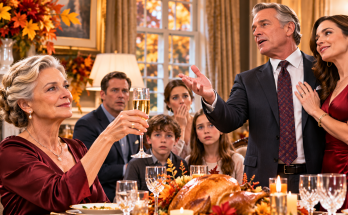
When dinner was ready, Jonathan stood beside his chair and raised his glass.
“I’d like to say something.”
Everyone became quiet.
He looked toward me.
“Last year, I came here thinking the farm was the answer to all my problems.”
He paused.
“I was wrong.”
Melissa reached for his hand.
Jonathan continued.
“I forgot that this place represents fifty-two years of somebody else’s hard work. And I forgot that being someone’s son doesn’t give me the right to decide what happens to his life.”
I felt tears gathering in my eyes.
He raised his glass slightly.
“To Dad. For teaching me something I should have learned a long time ago.”
Claire smiled.
Lily lifted her glass of apple juice.
“To Grandpa!”
Everyone laughed.
I looked toward Eleanor’s photograph on the mantelpiece.
Then I raised my own glass.
“To your mother,” I said.
Jonathan nodded.
“To Mom.”
We drank our toast and began dinner.
Nobody discussed inheritance.
Nobody produced legal documents.
Nobody asked me to sign anything.
For the first time in a long while, Thanksgiving felt like the holiday Eleanor had always loved.
A day to appreciate what we already possessed rather than calculate what we might receive.
Later that evening, after everyone had gone home, I walked toward the wooden bench overlooking the southern pasture.
The sky was turning purple.
A gentle wind moved through the maple trees.
I sat down and imagined Eleanor beside me.
“Jonathan’s learning,” I whispered.
“He took his time, but he’s learning.”
I smiled.
My son had believed that selling the farm would secure his family’s future.
What he hadn’t understood was that security built upon taking away someone else’s independence could never provide the foundation he wanted.
I had protected my home.
I had protected my financial future.
And, in doing so, I had given my son an opportunity to confront his own mistakes rather than spend the rest of his life depending on me to erase them.
At seventy-seven, I no longer worked as quickly as I once had.
My hands were rough.
My knees were stiff.
My hair had turned almost completely white.
But I was still capable of making decisions.
Still capable of loving my children.
Still capable of waking each morning with plans of my own.
I looked across the land as the last light disappeared behind the distant hills.
Fifty-three years earlier, Eleanor and I had arrived with little more than determination and a dream.
Together, we had turned that dream into a home.
I had no intention of allowing anyone to turn it into a solution for debts they had created without me.
Someday, my time on the farm would end.
That was inevitable.
But until that day arrived, I would continue sitting on this bench, watching the seasons change, listening to the horses, and remembering the woman who had shared this extraordinary ordinary life with me.
My children might inherit something from me eventually.
But they would never inherit the right to decide that my life was already over.
I stood slowly and walked toward the farmhouse.
Warm light poured through the kitchen windows.
Inside, Eleanor’s photograph was waiting.
Outside, the land remained exactly where it belonged.
And so did I.
THE END