For several seconds, I couldn’t move. I stared at the document on Desmond’s phone, feeling the blood drain from my face. My signature was there. My name. My farm. And beneath it, the signature of the man who had represented me through the most important transaction of my life.
Martin Caldwell. My attorney. The man who had assured me everything was in order. The man who had urged me to sign the final sale documents before the end of the week. The man who knew, perhaps better than anyone, that I was about to become a multimillionaire.
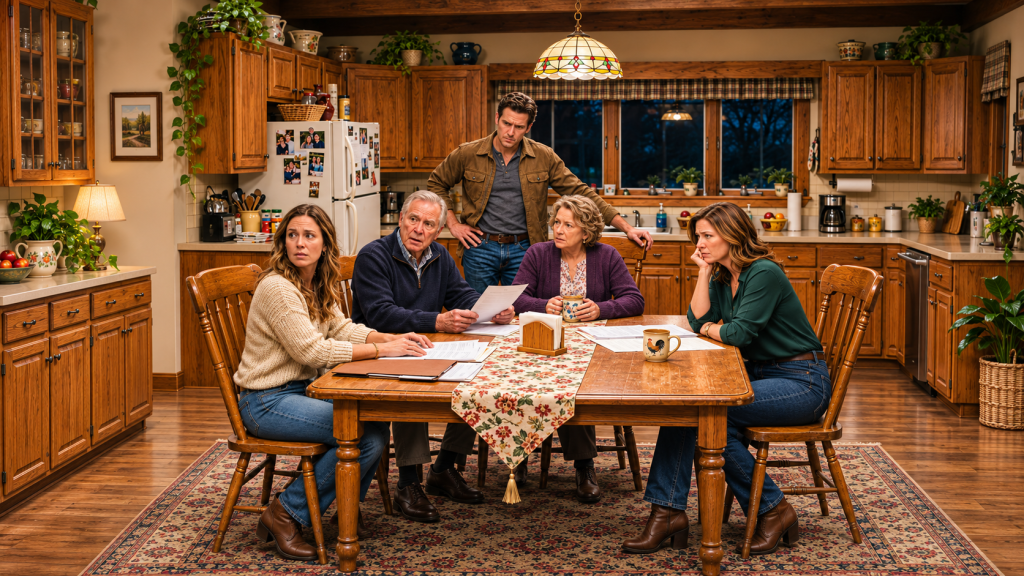
Across the kitchen table, my sister Ranata stood perfectly still. For fifteen years, she’d looked at me with the same indulgent smile. The kind people reserve for someone they believe will never amount to much. But now, with the evidence spread across our parents’ kitchen table, that smile was gone.
“Ranata,” I whispered, “what have you done?”
She swallowed.
“Fay, you’re misunderstanding everything.”
I looked toward our father.
His face had gone pale.
“Dad, where did the money go?”
He stared at the statement.
Four hundred and eighty-six thousand dollars.
Fifteen years of transfers.
Fifteen years of believing he was helping his struggling daughter.
Fifteen years of watching his retirement savings disappear into a story I had never known existed.
Then he looked at Ranata.
“Tell her.”
My sister pressed her lips together.
“Daddy, please.”
His hand struck the table.
“Tell her what happened to our money!”
My mother began crying.
Desmond closed his eyes.
And Ranata finally whispered the sentence that changed everything.
“Martin said the farm sale would make it all right.”
I felt my heart stop.
“What?”
She looked at me.
“Once you sold the land, everybody would get their money back.”
The room went silent.
I stared at her.
“Everybody?”
She swallowed.
Then looked toward the brown folder beside my chair.
And suddenly, I understood.
The missing family money wasn’t the only thing they had been planning to take.
They had expected to reach into my thirty-nine-million-dollar sale.
My name is Fay Morgan.
I’m thirty-seven years old.
And until that evening, I had believed my greatest achievement was surviving fifteen years of hard work without borrowing money from anyone.
I’d purchased my eighty-acre farm when I was twenty-two.
It wasn’t much to look at back then.
The fences leaned.
The equipment shed leaked.
The fields needed improvement.
And the farmhouse had windows that rattled every time the wind came across the valley.
But it was mine.
I’d worked two jobs to save the down payment.
Taken out a mortgage.
And spent fifteen years turning that tired stretch of land into something productive.
My family rarely visited.
My father considered farming a risky occupation.
My mother worried about my being alone.
And my older sister, Ranata, never missed an opportunity to remind everyone that she had married well.
According to her, I was the daughter who couldn’t get ahead.
She was the responsible one.
The successful one.
The one our parents could depend on.
And apparently, while I was repairing fences and calculating crop expenses, she had been collecting hundreds of thousands of dollars in my name.
I looked at her across the table.
“Explain the lien.”
Ranata crossed her arms.
“You wouldn’t understand the arrangement.”
I laughed bitterly.
“Try me.”
She glanced toward Desmond.
He stared at her.
“Tell the truth, Ranata.”
Her eyes filled with anger.
“You’re supposed to be on my side.”
He shook his head.
“I thought I was.”
Then he looked toward my parents.
“I didn’t know where the money came from.”
Ranata turned sharply.
“Desmond!”
He continued.
“I knew she’d arranged financing. I knew there had been money from her parents. But she told me it was an early inheritance.”
My father’s expression crumpled.
“An inheritance?”
Desmond nodded miserably.
“She said you’d decided to help us buy the house.”
I stared at him.
Their new house.
A beautiful property with a curved driveway, a swimming pool, and the kind of kitchen Ranata loved showing off in photographs.
I’d attended their housewarming party the previous year.
Ranata had described the purchase as the reward for years of careful investing.
She’d made a speech about how good financial decisions created freedom.
Then she’d looked at my worn work boots and said, “Maybe one day you’ll understand that, Fay.”
I remembered smiling politely.
Now I felt sick.
Dad pushed another paper toward me.
It listed the transfers from his and Mom’s accounts.
The earliest payment was dated fourteen years earlier.
Three thousand dollars.
Reason: Fay’s equipment repair.
Another followed six months later.
Five thousand.
Reason: Farm mortgage assistance.
Then ten thousand.
Then twenty-five thousand.
As the years passed, the amounts became larger.
Eventually, there were transfers of forty thousand dollars at a time.
All marked as support for me.
Every single one directed to an account controlled by Ranata.
I looked up.
“Dad, why didn’t you ever ask me?”
He swallowed.
“Ranata said you were embarrassed.”
I stared at him.
“She said you didn’t want us discussing it.”
His voice cracked.
“She told us you were too proud to admit how bad things had become.”
I shook my head.
“And you believed her?”
My mother began sobbing.
“Fay, sweetheart, we thought we were helping.”
I looked toward her.
“For fifteen years?”
She nodded through tears.
“We thought you were struggling.”
I took a breath.
“Mom, you could have asked me.”
She looked down.
“I know.”
The words sat between us.
Simple.
Devastating.
They could have asked.
One telephone call.
One honest question.
Fifteen years of misunderstanding might have ended before the first thousand dollars became ten thousand.
But Ranata had understood something about our family that I hadn’t.
My parents found it easier to believe the story they’d already accepted than to question the daughter who seemed so certain of everything.
I looked at Ranata.
“Why?”
She gave a small, humorless laugh.
“Do you really want to know?”
“Yes.”
She looked toward my parents.
“Because they were never going to help me.”
My father stared at her.
“What are you talking about?”
Ranata’s eyes filled.
“You always said I had Desmond. That I had a nice house. That I didn’t need anything.”
Desmond frowned.
“We didn’t have that house fifteen years ago.”
She ignored him.
Then pointed toward me.
“But Fay could wear dirty boots and drive a broken truck, and suddenly everyone felt sorry for her.”
I stared at my sister.
“Ranata, I never asked them for anything.”
“I know!”
Her shout startled us all.
She began crying.
“I know you didn’t!”
For a moment, there was only the sound of my mother’s sobbing.
Then Ranata whispered:
“That’s what made it so easy.”
I sat back.
There it was.
The truth she’d spent fifteen years avoiding.
It hadn’t begun with a massive plan.
It had begun with an opportunity.
A story.
A small amount of money.
And the discovery that our parents wouldn’t check whether what she said was true.
Desmond lowered himself into a chair.
“Ranata, how much of that money went toward our house?”
She stared at him.
He repeated the question.
“How much?”
She wiped her face.
“I don’t know.”
“Then how much is left?”
Silence.
He closed his eyes.
“Ranata.”
She whispered, “Almost none.”
My mother gasped.
Dad looked as though someone had struck him.
I stood.
For one terrible moment, I thought I might say something I could never take back.
I’d spent fifteen years tolerating my sister’s jokes.
Her condescension.
Her carefully arranged family stories.
I’d believed she was simply vain.
Petty.
Competitive.
But she’d been taking our parents’ savings while making them believe they were rescuing me.
And then she’d apparently used my farm as part of a scheme involving forged documents.
I looked at her.
“Did Martin Caldwell know the signatures were false?”
She said nothing.
I stepped closer.
“Ranata.”
Her voice dropped.
“He said everything was temporary.”
I felt cold.
“Did he know?”
She looked away.
“Yes.”
The kitchen became utterly silent.
I thought about Martin.
He’d represented me during the negotiations over the farm.
Reviewed offers.
Spoken with the buyer’s attorneys.
Explained closing documents.
And congratulated me when the deal finally went through.
He’d looked me in the eye and said, “Fay, you’ve earned this.”
Had he known my sister was waiting to take a piece of it?
I turned toward the folder.
Then remembered something.
An email.
Three weeks earlier.
Martin had sent me a message saying the buyer’s financing schedule required an expedited closing.
He’d urged me not to delay.
I’d trusted him.
Now I wondered whether the urgency had anything to do with the buyer at all.
I took out my phone.
Opened my email.
And found his message.
Fay, given the revised timeline, I strongly recommend completing the transaction before the end of the month. Any unnecessary delay could complicate matters.
I stared at the words.
Then remembered another message.
One I’d received that morning but hadn’t opened because I was busy.
It was from a legal specialist associated with the closing company.
I tapped it.
The subject line read:
CONFIDENTIAL: POST-CLOSING DOCUMENT DISCREPANCY
My stomach tightened.
I opened the message.
Three lines into it, I stopped breathing.
The sender was a woman named Natalie Brooks, who worked for the independent title and escrow company involved in my sale.
She explained that during a routine post-closing review, her team had discovered an unrecorded document asserting that part of the farm had been pledged as security for a private loan.
The purported agreement carried my signature.
It also carried Martin Caldwell’s name.
Natalie said the document did not appear among the valid encumbrances cleared at closing and had not affected the completed sale.
But a separate party had recently asked whether the agreement could support a claim against my sale proceeds.
She wanted to confirm whether I had ever authorized it.
I read the message twice.
Then a third time.
The thirty-nine million dollars had been properly paid through the completed sale.
My bank had confirmed receipt.
The buyer had received the property under the closing arrangements.
But someone was trying to turn a suspicious document into a claim against the money.
I looked up.
“Ranata, did Martin tell you I’d signed away a portion of my sale proceeds?”
She didn’t answer.
I held up the phone.
“Did he?”
Her face changed.
Desmond rose slowly.
“Fay, what’s wrong?”
I swallowed.
“Someone contacted the closing company claiming I owed money under a private agreement.”
My father looked bewildered.
“How much?”
I stared at Ranata.
She covered her mouth.
And I suddenly knew the number was going to be worse than I imagined.
“Ranata,” I whispered.
“How much were you planning to take?”
She began crying.
Finally, she answered.
“Four million.”
My mother screamed.
Dad gripped the edge of the table.
Desmond stared at his wife.
And I stood there, feeling as though the ground beneath my feet had disappeared.
Four million dollars.
Not four hundred thousand.
Not the amount she’d taken from our parents.
Four million.
I looked at her.
“You were going to steal four million dollars from me?”
She shook her head frantically.
“No! Martin said it was a settlement.”
“A settlement for what?”
“For the years Mom and Dad helped you!”
I laughed.
A sound so sharp and bitter that even I hardly recognized it.
“They never helped me.”
“I know that now.”
“You knew it then!”
She began sobbing.
I continued.
“You invented the debts. You invented the financial emergencies. You took their money, and now you want mine to cover what you stole!”
Ranata collapsed into the chair.
And whispered:
“I thought you’d never find out.”
For a long moment, nobody spoke.
Then Dad stood.
He looked older than he had an hour earlier.
Not simply tired.
Defeated.
He stared at Ranata.
“Get out.”
She looked up.
“Daddy…”
He pointed toward the door.
“Get out of my house.”
My mother began crying harder.
“Robert, please—”
He shook his head.
“Not tonight.”
Ranata rose slowly.
Desmond didn’t follow her.
She turned toward him.
“Are you coming?”
He stared at the kitchen floor.
Then said quietly, “I need to understand what you’ve done.”
Her expression collapsed.
“Desmond…”
He looked up.
“I don’t know who I’ve been married to.”
She stood there for another moment.
Then walked out.
The front door closed.
And silence settled over the kitchen.
My mother stared at the empty doorway.
Then looked toward me.
“Fay, I’m so sorry.”
I wanted to comfort her.
That had always been my role.
When Dad was upset, I calmed him.
When Mom worried, I reassured her.
When Ranata made an unkind remark, I smiled and changed the subject.
I’d spent years making everyone else comfortable.
But that night, I couldn’t.
I looked at my parents.
“I need to go.”
Dad stood.
“Fay, wait.”
I shook my head.
“Not tonight.”
His eyes filled.
“We need to talk.”
“We do.”
I picked up the brown folder.
“But first I need to protect myself.”
I walked toward the door.
Then stopped.
I turned back.
“Dad, Mom?”
They looked at me.
“For fifteen years, you believed I was helpless because Ranata told you I was.”
My mother’s face crumpled.
I continued.
“You never saw me pay off my mortgage. You never saw the improvements I made. You never asked how the farm was doing.”
Dad lowered his eyes.
“And now you’re shocked to learn I sold it for thirty-nine million dollars.”
I took a breath.
“I’m not angry because you didn’t know I was successful.”
My voice broke.
“I’m hurt because you were willing to believe I was failing without ever asking me whether it was true.”
My mother began sobbing.
Dad stared at the floor.
I nodded once.
Then left.
Outside, the night air was cold.
I climbed into my old pickup and sat behind the wheel.
For several minutes, I couldn’t start the engine.
My phone glowed in my hand.
Thirty-nine million dollars.
I had spent years imagining what financial freedom would feel like.
I’d expected relief.
Gratitude.
Maybe a little disbelief.
But that night, the number meant almost nothing.
Because my family had just shown me how easily trust could be turned into a weapon.
I took a deep breath.
Then called Natalie Brooks.
She answered on the third ring.
“Ms. Morgan?”
“Yes. This is Fay Morgan.”
“Thank you for calling. I was hoping to speak with you about the document we found.”
I swallowed.
“I didn’t sign it.”
A pause.
“Are you certain?”
“Absolutely.”
Natalie’s tone changed.
“Then we need to document that immediately.”
I nodded.
“I also have reason to believe my attorney may be involved.”
She went silent.
Then said carefully, “In that case, I strongly recommend obtaining independent legal counsel before taking any further action.”
I looked toward my parents’ house.
Every light was still on.
“Can you help me find someone?”
Natalie hesitated.
“I can provide information about independent attorneys who haven’t been involved in the sale.”
I took a breath.
“Please.”
Then I asked the question that frightened me most.
“Is my money safe?”
She answered carefully.
“The sale proceeds were disbursed under the completed closing, and your bank has confirmed receipt. The document in question does not, by itself, give someone access to your account. But you should take appropriate precautions and have counsel review any attempted claim.”
I closed my eyes.
For the first time that evening, I felt a small amount of relief.
Then Natalie added something.
“Ms. Morgan, there’s another reason I wanted to contact you.”
My stomach tightened.
“What?”
“The person who submitted the disputed agreement claimed to be acting with your attorney’s knowledge.”
I swallowed.
“Who submitted it?”
She paused.
“An entity called Morgan Family Agricultural Holdings.”
I went still.
I’d never heard of it.
Natalie continued.
“It was formed fourteen months ago.”
I stared through the windshield.
“And who’s behind it?”
She took a breath.
“The documents we received identify your sister as its managing member.”
I closed my eyes.
Ranata.
Again.
But then Natalie said something that made me sit upright.
“And there’s a second name on the authorization documents.”
My throat tightened.
“Who?”
She hesitated.
“Your father.”
For a moment, the world stopped.
My father.
The man who had just stared at the missing money in disbelief.
The man who had ordered Ranata out of his house.
His name was connected to the company attempting to claim four million dollars from my farm sale.
I swallowed.
“Are you saying my father signed these documents?”
Natalie answered cautiously.
“His name appears on them. That doesn’t establish whether he signed or authorized anything. We need to verify the records.”
I stared toward the house.
My father was still inside.
The kitchen light glowed through the curtains.
And suddenly I wondered whether the greatest betrayal of the evening had even been revealed yet.
I drove home.
Locked the door.
And sat at my kitchen table until nearly dawn.
I didn’t sleep.
I reviewed documents.
Saved copies of messages.
Wrote down everything I remembered from the conversation.
And prepared a list of questions for the independent attorney Natalie had recommended.
At six thirty the following morning, I received a text from Dad.
Fay, please call me.
I stared at it.
Then another message arrived.
There’s something I need to explain.
I took a breath.
And called him.
He answered immediately.
“Fay?”
“Dad.”
His voice sounded exhausted.
“I haven’t slept.”
“Neither have I.”
A pause.
Then I asked:
“Do you know what Morgan Family Agricultural Holdings is?”
Silence.
My stomach tightened.
“Dad?”
He took a breath.
“Yes.”
I closed my eyes.
“What is it?”
He hesitated.
“Ranata told me it was a family investment company.”
I gripped the phone.
“When?”
“Last year.”
I stared at the wall.
“And you agreed to be part of it?”
He swallowed.
“She said it would help organize family assets.”
I felt cold.
“Whose assets?”
He didn’t answer.
I closed my eyes.
“Dad, did you sign documents?”
A long silence followed.
Then he whispered:
“Yes.”
I pressed my hand against my forehead.
“What documents?”
He began crying.
“I thought they were about recovering the money we’d lent you.”
For a moment, I couldn’t speak.
Then I whispered:
“You signed papers asserting a claim against my farm without asking me?”
His voice broke.
“Ranata said you’d already agreed.”
I closed my eyes.
“Dad…”
“I know.”
“No, you don’t.”
My voice trembled.
“You believed I owed you money I’d never borrowed, and instead of speaking to me, you signed legal documents against my property.”
He began sobbing.
“I thought I was protecting your mother.”
I stared at the floor.
“And who was protecting me?”
He couldn’t answer.
That morning, I realized something that changed how I viewed the entire situation.
Ranata had committed the deception.
But my parents’ silence had allowed it to grow.
They hadn’t known everything.
They hadn’t understood every document.
And they may have been victims themselves.
But they had repeatedly chosen to act on assumptions about me rather than speak to me directly.
I loved them.
That hadn’t changed.
But love didn’t make their decisions harmless.
And for the first time in my life, I understood that I could care about my parents without pretending their choices hadn’t hurt me.
By nine that morning, I was sitting in the office of an attorney named Claire Bennett.
She was in her early fifties, with silver beginning to show in her dark hair and the calm expression of someone who had spent years listening to people explain why they hadn’t read documents before signing them.
She had no connection to Martin Caldwell.
No connection to Ranata.
And no personal interest in the outcome beyond representing me.
I placed the brown folder on her desk.
Then I told her everything.
The farm.
The sale.
The money my parents believed they’d given me.
Ranata’s company.
The forged signature.
And the documents my father had admitted signing.
When I finished, Claire sat quietly.
Then she said, “Fay, we’re going to separate what you know from what still needs to be established.”
I nodded.
“We have your account of the conversation, the financial records, the disputed agreement, and information about the closing. We need to obtain authenticated copies, identify who prepared each document, and determine whether anyone attempted to enforce a fraudulent claim.”
I swallowed.
“And Martin?”
She looked at me.
“We’ll examine his role carefully.”
Claire helped me arrange the preservation of relevant records.
She contacted the closing company.
Requested copies of the disputed documents.
And advised me about making a formal report concerning the suspected forgery and financial misconduct.
She also explained that because Martin had represented me, questions about professional misconduct and possible conflicts needed independent attention.
I listened carefully.
Then asked, “Can they take my thirty-nine million dollars?”
Claire met my eyes.
“Not merely because someone wrote a claim on a piece of paper.”
I exhaled.
“But the allegations are serious, and any attempt to pursue them needs a proper response.”
She paused.
“Your first responsibility right now is to protect your records, your accounts, and your legal position.”
I nodded.
For the first time, I felt my fear becoming something I could manage.
Three days later, Claire called with news.
The closing company had located correspondence showing that Martin Caldwell had received a copy of the purported farm security agreement months before my sale.
He had not disclosed it to me.
Instead, he had written to Ranata’s company, suggesting the alleged family debt could be resolved after closing.
I stared at Claire.
“He knew?”
“The correspondence indicates he knew about the claim.”
My stomach tightened.
“And he didn’t tell me.”
“No.”
Then she placed another document on the table.
It was a draft settlement agreement.
The amount was written in bold.
$4,000,000.
The supposed consideration was described as repayment of family advances, compensation for agricultural investment, and release of certain claims.
I read the page twice.
Then I looked up.
“But none of those advances happened.”
Claire nodded.
“That is your position, and the available records support serious questions about the claimed debt.”
I turned another page.
My heart stopped.
The agreement contained a paragraph authorizing Martin to negotiate payment arrangements on my behalf.
But I had never given him that authority.
The signature was mine in appearance only.
I felt sick.
“Claire, how many documents did they forge?”
She took a breath.
“We don’t know yet.”
The next discovery was even worse.
Martin had apparently expected Ranata’s claim to be resolved quietly after the sale.
But the independent title company had identified discrepancies and requested verification before treating the document as legitimate.
Instead of accepting the claim, Natalie Brooks had contacted me.
If she hadn’t, I might have received demands for payment backed by documents I didn’t know existed.
I looked at Claire.
“Martin urged me to close quickly.”
She nodded.
“His communications suggest he wanted the sale completed before certain questions were raised.”
I swallowed.
“Why?”
“We’re still examining that.”
But I had begun to understand the pattern.
Ranata had spent fifteen years persuading our parents that I was financially desperate.
Martin had helped produce documents claiming I owed money to a family entity.
And my farm sale had created an opportunity to demand millions under the appearance of settling old obligations.
It wasn’t clever.
It wasn’t sophisticated.
It was a scheme built on the assumption that everyone involved would continue believing what Ranata told them.
Except me.
And by then, I had stopped being quiet.
The investigation widened.
Financial records showed that Ranata had received the money my parents transferred.
Some had gone toward household expenses.
Some toward luxury purchases.
And a substantial portion had been used to support the purchase and improvement of her new home.
The missing $486,000 had not simply vanished.
It had been converted into a lifestyle.
The house.
The vacations.
The expensive furniture.
The leased SUV.
The jewelry Ranata wore to family gatherings.
Every time she’d mocked my old pickup, she’d been sitting inside a life partly financed by money taken from our parents under false pretenses.
Desmond requested a separate meeting with me.
I agreed to meet in Claire’s conference room.
He looked exhausted.
His eyes were red.
His wedding ring was gone.
When he sat down, he stared at his hands.
“Fay, I owe you an apology.”
I said nothing.
He continued.
“I believed Ranata when she said you were struggling.”
I looked at him.
“Did you ever ask me?”
He shook his head.
“No.”
He swallowed.
“She told me you were embarrassed.”
I gave a sad smile.
“That seems to have been her favorite explanation.”
He looked down.
“I didn’t question it.”
For a long moment, neither of us spoke.
Then Desmond opened a folder.
“I’m cooperating with the investigation.”
I nodded.
“I heard.”
He continued.
“I’ve provided the financial records I have, including documents from the house purchase.”
My throat tightened.
“And?”
He looked up.
“I intend to help restore the money that belongs to your parents, to the extent I legally can.”
I studied him.
“Why?”
His eyes filled.
“Because they trusted us.”
I swallowed.
“And Ranata abused that trust.”
He nodded.
“Yes.”
Then he said something I hadn’t expected.
“Fay, I used to admire how you lived.”
I stared.
He gave a sad smile.
“You worked hard. You didn’t spend money to impress anybody. You seemed happy with what you had.”
My eyes filled.
“Then why did you let her make fun of me?”
He looked down.
“Because it was easier than confronting her.”
I sat quietly.
His answer hurt.
But it was honest.
Desmond continued.
“I thought being a good husband meant supporting everything Ranata said.”
He shook his head.
“I was wrong.”
When he left, I didn’t feel victorious.
I felt tired.
Because the truth wasn’t bringing everyone together.
It was forcing people to confront the decisions they’d made while pretending not to see what was happening.
Two weeks later, Martin Caldwell’s involvement became part of a formal investigation.
He disputed wrongdoing at first.
He claimed he’d believed the family debt was genuine.
But correspondence, billing records, and document histories raised serious questions about whether he’d helped prepare or circulate instruments containing unauthorized signatures.
He was also subject to professional disciplinary scrutiny.
The legal process moved slowly.
There were interviews.
Requests for records.
Disputes over documents.
And lawyers representing people who had once seemed so certain they would never be questioned.
I learned to be patient.
I didn’t need to win every argument in public.
I needed the evidence preserved and the facts established.
The $39 million sale remained intact.
The attempted claim against my proceeds was not paid.
And the independent review of the closing documents helped protect my position.
But the financial damage to my parents was real.
One afternoon, Dad asked whether I would meet him and Mom.
I thought about refusing.
Then agreed.
Not at their house.
Not at the kitchen table where Ranata had spent years telling stories about me.
We met at a small restaurant outside town.
Dad looked older.
His shoulders seemed narrower.
Mom’s hair had gone almost entirely gray.
For a moment, seeing them hurt more than I expected.
These were the people who’d taught me to ride a bicycle.
Taken me to school.
Sat beside me when I was sick.
I loved them.
But I didn’t know how to trust them.
Dad stood when I approached.
“Fay.”
I nodded.
“Dad.”
Mom reached toward me.
I let her hug me.
Then we sat down.
For several minutes, nobody spoke.
Finally, Dad cleared his throat.
“I’ve been thinking about what you said.”
I looked up.
He continued.
“That we never asked you how you were doing.”
I nodded.
His eyes filled.
“You were right.”
My throat tightened.
He looked down.
“When you bought the farm, I thought you were making a mistake.”
“I know.”
“I thought you’d lose everything.”
I swallowed.
“And when Ranata started telling us you were struggling, it confirmed what I already believed.”
He began crying.
“I didn’t stop to consider that you might actually be doing well.”
I stared at him.
Then asked something I’d been carrying for years.
“Dad, did you ever believe in me?”
He closed his eyes.
For a long moment, he couldn’t speak.
Then he whispered, “Not enough.”
My eyes filled.
It wasn’t the answer I’d wanted.
But it was the truth.
Mom reached for my hand.
“Fay, I should have called you.”
I nodded.
“Yes.”
“I should have asked.”
“Yes.”
She began crying.
“I thought giving Ranata the money was protecting your pride.”
I looked down.
“Mom, my pride wasn’t the problem.”
She nodded.
“I know that now.”
I took a breath.
“I don’t need you to understand every decision I make. I don’t need you to approve of my truck or my clothes or the way I lived.”
I looked at both of them.
“But I need you to stop believing stories about me without asking whether they’re true.”
Dad wiped his eyes.
“We will.”
I shook my head gently.
“I need to see that, Dad. Not just hear it.”
He nodded.
And for the first time, he didn’t argue.
Then Mom asked a question that startled me.
“Fay, are you happy?”
I stared at her.
For fifteen years, they’d asked whether I was making enough money.
Whether I planned to settle down.
Whether the farm was too much work.
Whether I should consider a more respectable career.
But they had rarely asked whether I was happy.
I considered the question.
“I was happy on the farm.”
Mom nodded.
“I loved the mornings. The work. Watching something improve because I took care of it.”
My eyes filled.
“And selling it was harder than I expected.”
Dad looked surprised.
“But thirty-nine million dollars…”
I smiled sadly.
“Money doesn’t erase what a place means to you.”
He looked down.
“I suppose not.”
I continued.
“The sale gives me choices. I’m grateful for that.”
I paused.
“But I still miss the farm.”
For a long moment, nobody spoke.
Then Dad whispered, “I wish I’d visited more.”
I looked at him.
“Me too.”
The meal didn’t fix everything.
But it was the first conversation I could remember in which my parents listened to me without Ranata explaining my life for me.
And that mattered.
Several months later, the financial investigations reached an important turning point.
Ranata’s records established that the money our parents had transferred had largely been spent for purposes unrelated to my farm.
Evidence also supported serious allegations about the preparation and use of the purported security agreement.
Legal proceedings followed.
Ranata eventually acknowledged receiving the family money through false representations.
Martin’s conduct became the subject of separate legal and professional consequences.
The attempted four-million-dollar claim never resulted in payment.
But the truth didn’t restore my parents’ retirement savings overnight.
There were recovery efforts.
Civil claims.
Financial disclosures.
And difficult decisions concerning assets Ranata and Desmond had acquired.
I watched the process with a mixture of anger and sadness.
Part of me wanted Ranata to feel every moment of fear she’d caused.
Another part remembered the girl who used to braid my hair before school.
The sister who held my hand during thunderstorms.
The teenager who cried beside me when our childhood dog died.
People aren’t always one thing.
Ranata had once loved me.
I believed that.
But somewhere along the way, jealousy had become entitlement, and entitlement had become deception.
Understanding that didn’t excuse what she’d done.
It simply made the loss more painful.
One evening, Ranata wrote me a letter.
I almost threw it away.
Instead, I opened it.
Fay,
I know an apology doesn’t repair fifteen years of lies.
I told myself I deserved the money because I was the daughter who stayed close to Mom and Dad.
Then I started spending more than I could afford.
Every time they asked how you were doing, I invented another problem.
Eventually, I couldn’t admit the truth without admitting everything.
When I learned about your farm sale, I thought I could repay what I’d taken and nobody would ever know.
But Martin convinced me the documents could justify taking much more.
I let myself believe him because I wanted a way out that didn’t require confessing.
I’m sorry for what I did to you.
And I’m sorry for what I did to our parents.
Ranata.
I read the letter twice.
Then placed it in a drawer.
I didn’t respond immediately.
An apology was a beginning.
Not an eraser.
I wasn’t ready to rebuild our relationship.
And I didn’t owe her immediate forgiveness because she’d finally admitted what happened.
But I also decided I wouldn’t spend the rest of my life organizing my choices around her betrayal.
Six months after the sale, my accountant asked me a question.
“What do you want to do now?”
I stared at him.
For fifteen years, I had known the answer to that question every morning.
Feed the animals.
Check the irrigation.
Repair equipment.
Review expenses.
Plan for the next season.
Now I had more money than I could reasonably spend in several lifetimes.
But no farm to return to at sunrise.
I looked out the window.
“I don’t know.”
He smiled.
“Then perhaps you don’t have to decide everything immediately.”
I took his advice.
I worked with qualified professionals to plan for taxes, long-term investing, charitable giving, and the protection of my assets.
I didn’t buy a mansion.
Didn’t purchase a fleet of expensive vehicles.
And didn’t suddenly become interested in impressing people.
I did, eventually, replace the worn tires on my pickup.
The mechanic laughed.
“Fay, this truck’s going to outlive us both.”
I smiled.
“That’s the plan.”
But I made one decision that mattered more than anything I could have bought.
I established a scholarship and training fund for young people who wanted careers in agriculture.
Not because I believed farming was the only honorable occupation.
But because I knew how difficult it could be to begin with very little.
I remembered being twenty-two.
Standing in the field I’d just purchased.
Holding a mortgage agreement that frightened me more than I’d admitted.
Wondering whether I had the strength to make the farm work.
I wanted other young people to have access to practical training, mentoring, and opportunities to learn before taking on risks they didn’t understand.
The program began modestly, with a small group of students and partnerships with established agricultural educators.
There were no dramatic speeches.
No photographs of me holding an oversized check.
Just young people learning.
One afternoon, a nineteen-year-old woman named Hannah approached me after a workshop.
“Ms. Morgan?”
I smiled.
“Fay is fine.”
She nodded.
“I wanted to ask something.”
“Of course.”
She hesitated.
“My family thinks I’m making a mistake.”
I looked at her.
“About what?”
“Wanting to work in agriculture.”
My heart tightened.
She continued.
“My parents say I should find a better-paying profession.”
I nodded slowly.
“Have you thought carefully about the risks?”
“Yes.”
“Have you researched the options?”
She nodded.
“Then keep learning. Ask questions. Get good advice.”
Her eyes filled.
“But what if I fail?”
I smiled gently.
“Then you’ll need to understand why, make decisions, and decide what comes next.”
She stared at me.
Then I added, “Don’t build your future merely to prove somebody wrong. Build it because it’s a life you believe is worth pursuing.”
Hannah began smiling.
“Thank you.”
As she walked away, I thought about my father.
His disbelief.
His fear.
His certainty that my farm would fail.
For years, I’d wanted him to acknowledge that I had succeeded.
But now I understood that my life had never needed to become an argument I won against him.
I had built something meaningful because I cared about it.
That was enough.
One year after the sale, Dad visited me at the small property I’d purchased outside town.
It wasn’t another eighty-acre farm.
Just a modest house with a garden, several trees, and a wide porch overlooking the hills.
He arrived carrying a toolbox.
I smiled.
“What’s that for?”
He looked embarrassed.
“You mentioned the porch steps were loose.”
I laughed softly.
“They’re already repaired.”
He looked disappointed.
“Of course they are.”
I studied him.
Then pointed toward the garden fence.
“But there’s a gate that could use adjusting.”
His face brightened.
“I can do that.”
We spent the afternoon working together.
For the first time in years, Dad didn’t criticize my choices.
He didn’t ask why I hadn’t bought a larger house.
Didn’t mention my pickup.
Didn’t compare me with Ranata.
He simply handed me tools.
Held boards steady.
And listened when I explained what needed fixing.
As the sun began setting, we sat on the porch.
Dad looked toward the hills.
Then said quietly, “I was wrong about you.”
I swallowed.
He continued.
“I thought success had to look a certain way.”
I looked down.
“A big house?”
He nodded.
“A newer truck?”
He gave a small smile.
“Yes.”
Then his eyes filled.
“But you built a life without needing anyone to admire it.”
For a moment, I couldn’t speak.
Then I whispered, “I wanted you to be proud of me.”
His expression crumpled.
“I am.”
Tears streamed down my cheeks.
Dad reached for my hand.
“I should have said it years ago.”
I nodded.
“Yes.”
We sat quietly.
Then he asked, “Can you forgive me?”
I thought carefully.
“I want to.”
His eyes filled.
“But I need time.”
He nodded.
“I understand.”
For the first time, I believed he might.
My relationship with Mom improved slowly too.
She began calling just to ask how my day had gone.
Not to request money.
Not to discuss Ranata.
Not to offer advice about what I should do differently.
Sometimes we talked about gardening.
Sometimes recipes.
Sometimes nothing important at all.
But those conversations mattered.
Because for years, the family had treated my life as a story Ranata was allowed to tell.
Now my parents were learning to hear it from me.
Eventually, they began recovering part of the money they’d lost through legal restitution efforts.
The process was gradual and incomplete.
They also worked with a financial adviser to rebuild a realistic retirement plan.
I offered to help them secure appropriate professional advice and make sure their immediate needs were met.
But I didn’t hand over a blank check.
I loved my parents.
I wanted them to be safe.
But I also wanted our relationship to stop revolving around secret financial arrangements.
Money had already caused enough damage when combined with silence.
I wasn’t going to repeat the pattern.
As for Ranata, accountability changed her life.
Her marriage with Desmond was deeply damaged.
Their financial circumstances changed.
And she faced legal consequences for her conduct.
I heard updates from our parents occasionally.
Sometimes she asked about me.
Sometimes she wanted to know whether I would speak to her.
For a long time, I said no.
Not because I wanted to punish her.
But because I needed space to decide whether any relationship between us could ever be built on honesty.
Then, nearly two years after that night in our parents’ kitchen, I agreed to meet her.
We sat in a quiet park.
The trees were turning gold.
Ranata looked different.
There was no expensive jewelry.
No polished smile.
No effortless certainty.
She sat beside me on a bench.
“Fay.”
I nodded.
“Ranata.”
For several minutes, neither of us spoke.
Then she began crying.
“I don’t expect you to forgive me.”
I looked toward the trees.
“Good.”
She nodded.
“I don’t know how I became that person.”
I took a breath.
“I think you do.”
She looked at me.
I continued.
“You kept choosing the lie because it gave you something you wanted.”
Her eyes filled.
“Yes.”
I turned toward her.
“And every time you could have told the truth, you decided it was easier to keep hurting people.”
She began sobbing.
“I know.”
For a long moment, I said nothing.
Then she whispered, “I was jealous of you.”
I stared.
She continued.
“You didn’t care what people thought.”
I almost laughed.
“Ranata, I cared more than you knew.”
She looked up.
I took a breath.
“Every time you made me the joke at dinner, it hurt.”
Her face crumpled.
“Every time Dad believed you instead of asking me, it hurt.”
I swallowed.
“And every time you smiled at me like I was too foolish to understand my own life, I went home wondering why my sister couldn’t simply be happy for me.”
Ranata covered her face.
“I’m sorry.”
I looked toward the autumn leaves.
Then said quietly, “I believe you’re sorry.”
She looked up hopefully.
“But I don’t know whether I can trust you again.”
Her expression fell.
I continued.
“Maybe someday we can have a different kind of relationship.”
She nodded.
“I’d like that.”
“But it has to begin with the truth.”
She wiped her eyes.
“I understand.”
We didn’t hug when we left.
There was no dramatic reconciliation.
No sudden restoration of fifteen lost years.
But we had finally spoken honestly.
And that was more than we’d managed in a very long time.
Today, people sometimes ask me what I bought after selling my farm for thirty-nine million dollars.
They expect an exciting answer.
A mansion.
A yacht.
A collection of luxury cars.
I usually smile and tell them I bought something far more valuable.
Time.
Time to make decisions carefully.
Time to help people without sacrificing my own security.
Time to build a life that reflects what matters to me.
And time to learn that I don’t have to prove my worth to anyone.
I still drive my old pickup sometimes.
The seats are worn.
The paint is faded.
And the odometer has passed another milestone.
But when I climb behind the wheel, I remember the woman who bought eighty acres with trembling hands and almost no savings.
The woman who worked before sunrise.
Fixed broken fences.
And kept going when people assumed she’d fail.
That woman built the life that made the sale possible.
No one else did it for her.
One evening, I found myself standing beside a field just before sunset.
It wasn’t my old farm.
That property now belonged to the company that had purchased it.
The land had changed.
The future there would look different.
But the evening smelled the same.
Dry grass.
Warm earth.
The faint sweetness of approaching rain.
I stood quietly.
Then remembered the day the sale closed.
Thirty-nine million dollars.
I had looked at the confirmation on my phone and felt strangely calm.
Three days later, I stood outside my parents’ house holding grocery bags while my sister told them I couldn’t support myself.
At the time, I thought the money would expose who people really were.
But the truth was more complicated.
The sale didn’t change my sister into someone dishonest.
She’d been lying for years.
It didn’t make my parents suddenly doubt me.
They’d been doing that long before the money arrived.
What changed was that the deception finally became impossible to hide.
And once it was exposed, we all had choices to make.
Ranata could accept responsibility or continue inventing excuses.
My parents could confront their assumptions or cling to them.
And I could decide whether wealth would become another way of measuring my value.
I chose something different.
I chose to protect what I’d earned.
To stop accepting disrespect merely because it came from family.
And to build relationships in which honesty mattered more than appearances.
I learned that love without trust is painful.
That forgiveness doesn’t require immediate reconciliation.
And that boundaries are not punishments.
They’re the conditions that allow people to remain in our lives without continuing to hurt us.
Most importantly, I learned that being underestimated doesn’t mean you have to spend your life proving people wrong.
Sometimes the greatest freedom is realizing their opinions never determined your worth in the first place.
Last month, Dad came over for dinner.
Mom brought her homemade peach pie.
We sat around my small kitchen table.
The conversation wandered from the weather to gardening to the strange noise my truck had been making.
At one point, Dad looked toward the window.
“You know, Fay, you could afford a new truck.”
I laughed.
“So I’ve heard.”
He smiled.
“Just saying.”
Then Mom reached across the table and squeezed my hand.
“Are you happy, sweetheart?”
I looked around.
At my parents.
At the warm kitchen.
At the quiet life I’d chosen.
And for the first time in years, I didn’t feel the need to explain myself.
“Yes,” I said.
“I really am.”
Dad smiled.
Then changed the subject.
It was such a small moment.
But it meant more to me than the money ever had.
Because they were finally asking about my happiness instead of assuming they knew my life.
When they left, I stood on the porch and watched their car disappear down the road.
I thought about how much had changed.
The farm was gone.
My bank account was larger than I’d ever imagined.
My sister’s deception had been exposed.
And my parents were slowly learning to know the daughter they’d spent years misunderstanding.
But I was still Fay.
Still happiest in old boots.
Still more comfortable with dirt on my hands than diamonds around my neck.
Still convinced that a person’s character matters far more than what they own.
I went inside.
Placed the dishes in the sink.
And opened the drawer where I kept the old brown folder.
The closing statement was still there.
Thirty-nine million dollars.
A number that had once seemed impossible.
Beside it, I kept another document.
The first payment receipt from the farm I’d purchased fifteen years earlier.
I looked at them together.
The beginning.
And the end.
Then I smiled.
Because the money was never the most important part of the story.
For fifteen years, my family believed I was the daughter who needed rescuing.
My sister used that belief to take nearly half a million dollars from our parents.
Then she tried to turn my success into another opportunity to take what didn’t belong to her.
But the greatest surprise wasn’t that I had thirty-nine million dollars.
It was discovering how much damage people could cause when they stopped asking questions and started believing convenient stories.
And how much could begin to heal once the truth was finally spoken.
I closed the folder.
Turned off the kitchen light.
And stepped outside beneath the stars.
For fifteen years, I’d worked hard to own a piece of land.
Now I owned something I valued even more.
The freedom to decide what kind of life I wanted.
The freedom to help without being manipulated.
The freedom to love my family without surrendering my self-respect.
And the freedom to stop carrying a story about myself that had never been true.
I wasn’t the helpless daughter they believed they were supporting.
I was the woman who built a thirty-nine-million-dollar future while everyone else was busy underestimating her.
And when the truth finally came out, I didn’t need to shout.
I didn’t need to humiliate anyone.
I didn’t need to buy respect.
I simply opened the folder.
Showed them the facts.
And let fifteen years of lies collapse beneath the weight of the truth.